
Outdoor Delivery Robots: Transforming Last-Mile Logistics with Autonomous Innovation
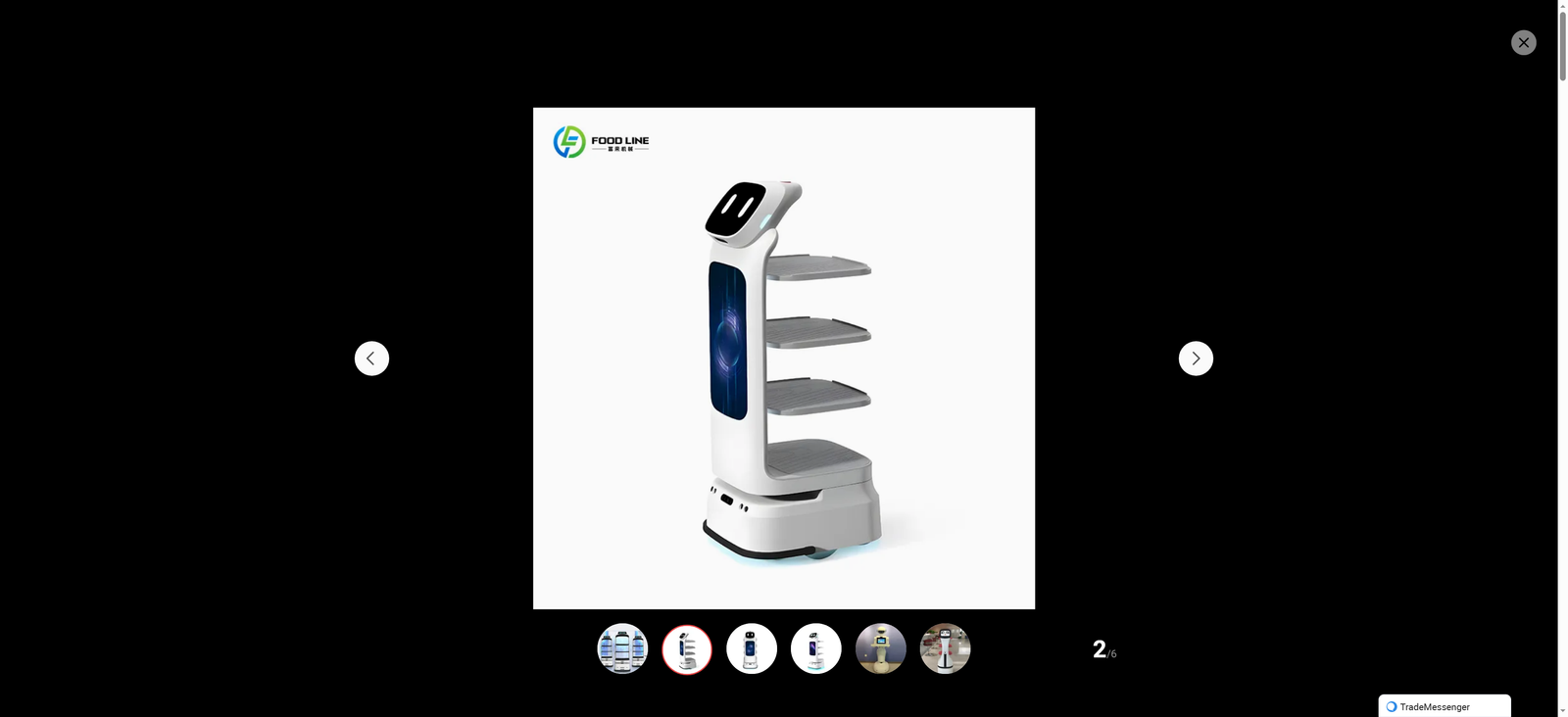
In an era where speed, efficiency, and convenience define customer expectations, the logistics industry is undergoing a profound transformation driven by technological advancement. Among the most groundbreaking innovations is the outdoor delivery robot—a smart, autonomous solution designed to conquer the challenges of last-mile delivery, redefine service standards, and reshape how goods reach our doorsteps. Unlike traditional indoor delivery robots confined to controlled spaces, outdoor delivery robots are engineered to thrive in dynamic, unpredictable environments, bridging gaps in urban and suburban logistics while unlocking new possibilities for businesses across sectors.
At the core of outdoor delivery robots’ success lies their cutting-edge technology, which enables reliable, safe, and efficient operation in even the most complex outdoor settings. Equipped with a fusion of advanced sensors—including 3D lidar, depth cameras, ultrasonic radar, and mmwave radar—these robots possess exceptional environmental perception capabilities, allowing them to detect pedestrians, vehicles, and obstacles in real time while navigating sidewalks, crosswalks, and uneven terrains with precision. Powered by AI-driven navigation systems and machine learning algorithms, they continuously learn and optimize their routes based on real-time data, adapting to traffic conditions, weather changes, and unexpected barriers to ensure the fastest and safest delivery path. Many models also integrate GPS and RTK technology for pinpoint positioning, while dual AI智慧引擎 (dual AI intelligent engines) provide redundant safety measures, ensuring accurate navigation even in low-light or extreme weather conditions like rain and snow.
Another key advantage of outdoor delivery robots is their versatility in both functionality and application scenarios. Designed to handle a wide range of delivery needs, they come with multiple compartment options—single, dual, or open compartments—to accommodate food, beverages, parcels, pharmaceuticals, and even garbage collection, making them adaptable to diverse business requirements. Their application scope spans urban areas, apartment communities, hotels, resorts, campsites, office parks, and university campuses, addressing critical logistics pain points across industries. For restaurants and cafes, they deliver meals to office workers or outdoor terraces in vehicle-restricted areas; for e-commerce and local shops, they provide reliable last-mile parcel delivery directly to customers’ doors; for hotels and resorts, they transport amenities to guests in garden areas or poolside zones; and for sanitation services, they assist in garbage collection alongside human workers. Notably, they also support 24-hour operation, filling the gap in delivery services during nighttime, early mornings, and weekends when human couriers are scarce.
For businesses, adopting outdoor delivery robots translates to tangible operational benefits that boost profitability and competitiveness. The global outdoor delivery robot market is projected to grow at a CAGR of 24.5%, surging from $2.1 billion in 2024 to $12.5 billion by 2033—a clear indicator of their rising demand and market potential. By automating repetitive delivery tasks, these robots significantly reduce labor costs, a critical advantage amid the global shortage of delivery personnel that has led to higher costs and longer delivery times. They also enhance delivery efficiency: with operating times of up to 12 hours on a single charge and automatic return-to-charging capabilities, they ensure continuous operation without manual intervention, while their ability to navigate shortcuts and avoid traffic congestion reduces delivery times by up to 40% in some cases. Additionally, businesses can leverage a centralized delivery service management platform to monitor robot status, location, and task progress in real time, enabling remote control when necessary and optimizing fleet efficiency through intelligent dispatching.
Safety and user experience are paramount in the design of outdoor delivery robots, making them a trusted solution for both businesses and consumers. These robots adhere to pedestrian safety regulations, operating at speeds of 0.5 to 2 m/s (up to 15 km/h) and weighing less than 500kg to minimize collision risks, while their advanced obstacle avoidance technology has been shown to reduce traffic accidents involving delivery workers by 47%. For users, convenience is key: a companion app allows customers to request deliveries, track their orders in real time, and receive notifications when the robot arrives at the destination, while secure access methods—such as passwords, mobile numbers, or NFC readers—ensure that only authorized users can retrieve their items. Modular compartment designs with independent doors and built-in fans for air circulation also maintain the hygiene and integrity of delivered goods, whether it’s hot food, cold beverages, or sensitive parcels.
As the world moves toward smarter cities and more efficient logistics systems, outdoor delivery robots are poised to become an integral part of urban infrastructure. Industry data shows that as of November 2025, China’s outdoor delivery robot cumulative shipments exceeded 3.9 million units, with 2.7 million new deliveries in 2025 alone, and global cumulative shipments are expected to reach 15 million units by 2026 and 75 million by 2030. Technological advancements—including the shift from “single-robot intelligence” to “vehicle-road-cloud collaboration,” the adoption of hydrogen-electric hybrid power solutions, and improved multi-robot collaboration—will further expand their capabilities, enabling them to handle heavier payloads, navigate more complex terrains, and integrate seamlessly with smart city systems like elevators, access control, and IoT devices.
In conclusion, outdoor delivery robots are not just a technological novelty—they are a practical, scalable solution that addresses the most pressing challenges of last-mile logistics. By combining advanced technology, versatility, efficiency, and safety, they empower businesses to reduce costs, enhance service quality, and stay ahead in a competitive market, while providing consumers with faster, more convenient, and contactless delivery experiences. Whether you’re a restaurant owner looking to expand your delivery reach, a property manager seeking to improve resident convenience, or a logistics provider aiming to optimize last-mile operations, outdoor delivery robots offer a future-proof investment that aligns with the evolving needs of modern consumers and smart cities. The era of autonomous outdoor delivery is here—and it’s transforming the way we connect, consume, and thrive.