
With the rapid development of artificial intelligence and intelligent manufacturing, the wave of automation has swept across various industries, and the catering and hotel sectors are no exception. Delivery robots, once a novelty in science fiction movies, have now become a common sight in restaurants and hotels, quietly changing the way services are provided. From the bustling dining halls of restaurants to the quiet corridors of hotels, these intelligent robots are shouldering the responsibility of food delivery, breaking through the limitations of traditional manual services and opening a new chapter of efficient, hygienic and personalized service experience.
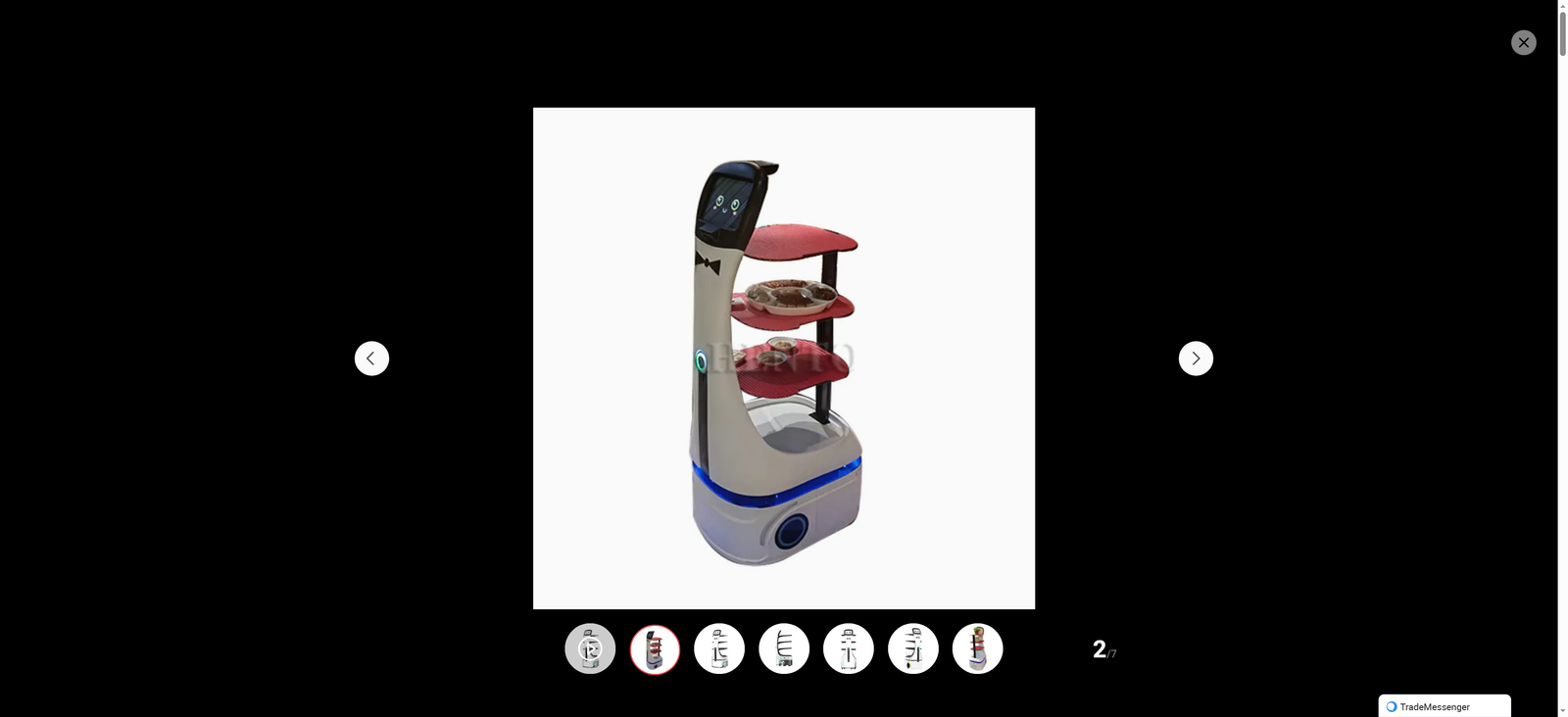
In restaurants, delivery robots have become a powerful assistant for catering operators, solving many pain points that have long plagued the industry. For busy peak hours, the shortage of waiters and the long waiting time for food delivery have always been the main factors affecting customers' dining experience. However, with the participation of delivery robots, this situation has been significantly improved. Equipped with advanced navigation and obstacle avoidance systems, these robots can accurately identify the layout of the restaurant, smoothly bypass tables, chairs and customers, and send the prepared dishes to the designated table in the shortest time. Unlike human waiters who may be exhausted and make mistakes after long hours of work, delivery robots can maintain a stable working state 24 hours a day, ensuring the timeliness and accuracy of food delivery. This not only reduces the workload of the restaurant staff, allowing them to focus more on improving the quality of service such as dish preparation and customer consultation, but also shortens the customer's waiting time, enhancing the overall dining satisfaction.
In addition to improving efficiency, delivery robots also bring a more hygienic dining environment to restaurants. In the post-epidemic era, customers pay more and more attention to food safety and hygiene. The whole process of food delivery by robots avoids direct contact between human hands and dishes, reducing the risk of cross-infection. At the same time, the robot body can be regularly disinfected and cleaned, ensuring that every link of food delivery is clean and hygienic. For some high-end restaurants that pursue quality and detail, delivery robots have also become a new "business card" to show the brand's sense of technology. The stylish and intelligent appearance of the robot, combined with the warm voice broadcast, not only adds a sense of fun to the dining process, but also enhances the brand image of the restaurant, leaving a deep impression on customers.
The application of delivery robots in hotels is equally brilliant, bringing a more convenient and intimate service experience to guests. Hotels, as places that provide accommodation and catering services, often need to deal with a large number of food delivery needs, such as room service, breakfast delivery, and afternoon tea delivery. In the past, room service relied entirely on hotel attendants. Due to the large number of rooms and the scattered distribution, it often took a long time for guests to receive the ordered food after placing an order, especially during the peak period of meal delivery. Delivery robots have perfectly solved this problem. Guests only need to place an order through the hotel's mobile app or the landline in the room, and the robot will receive the order information immediately, go to the restaurant to pick up the food, and then accurately reach the door of the guest's room according to the room number. The whole process is fully automated, without the need for manual intervention, which greatly shortens the delivery time. At the same time, the robot's silent operation will not disturb other guests in the corridor, ensuring the quietness of the hotel environment.
For hotel operators, the use of delivery robots also helps to reduce operating costs and improve management efficiency. The cost of hiring and training hotel attendants is increasing year by year, and the high turnover rate of staff also brings great pressure to the hotel's human resource management. The one-time investment in delivery robots can save long-term labor costs. Moreover, the robot can be connected to the hotel's intelligent management system, and the operation data such as delivery volume, running status and power consumption can be monitored in real time. The management can adjust the work arrangement according to the data, optimize the service process, and further improve the operational efficiency of the hotel. In addition, delivery robots can also provide 24-hour uninterrupted service, which is especially important for hotels that receive late-check-in guests or guests who need food delivery at night. It ensures that guests can enjoy high-quality food service at any time, enhancing the hotel's competitiveness in the market.
Of course, the popularization of delivery robots in restaurants and hotels does not mean that manual services will be completely replaced. On the contrary, robots and humans complement each other, forming a more efficient service model. Robots are responsible for repetitive and tedious delivery work, while human staff can focus on providing more personalized and emotional services, such as communicating with customers, understanding their needs, and solving more complex problems. For example, in a restaurant, a robot can deliver dishes, while a waiter can introduce the characteristics of the dishes to customers and recommend suitable collocations; in a hotel, a robot can deliver food to the room, while a housekeeper can provide personalized services such as travel advice for guests. This combination of intelligence and humanity not only improves service efficiency, but also retains the temperature of service, making customers feel more comfortable and satisfied.
Looking to the future, with the continuous progress of technology, delivery robots will be more intelligent and humanized. They may have more accurate navigation capabilities, be able to adapt to more complex indoor environments; they may also have voice interaction functions, which can communicate with customers more smoothly; even, they may be able to realize functions such as automatic meal taking and table cleaning, further expanding the scope of application. For restaurants and hotels, embracing delivery robots is not only a response to the trend of intelligent development, but also a practical measure to improve service quality and reduce operating costs. It is believed that in the near future, delivery robots will become an indispensable part of the catering and hotel industries, bringing a more convenient, efficient and high-quality service experience to people's lives.