
Customized Intelligent Smart Service Delivery Robot for Efficient Food Restaurant Hotel Use
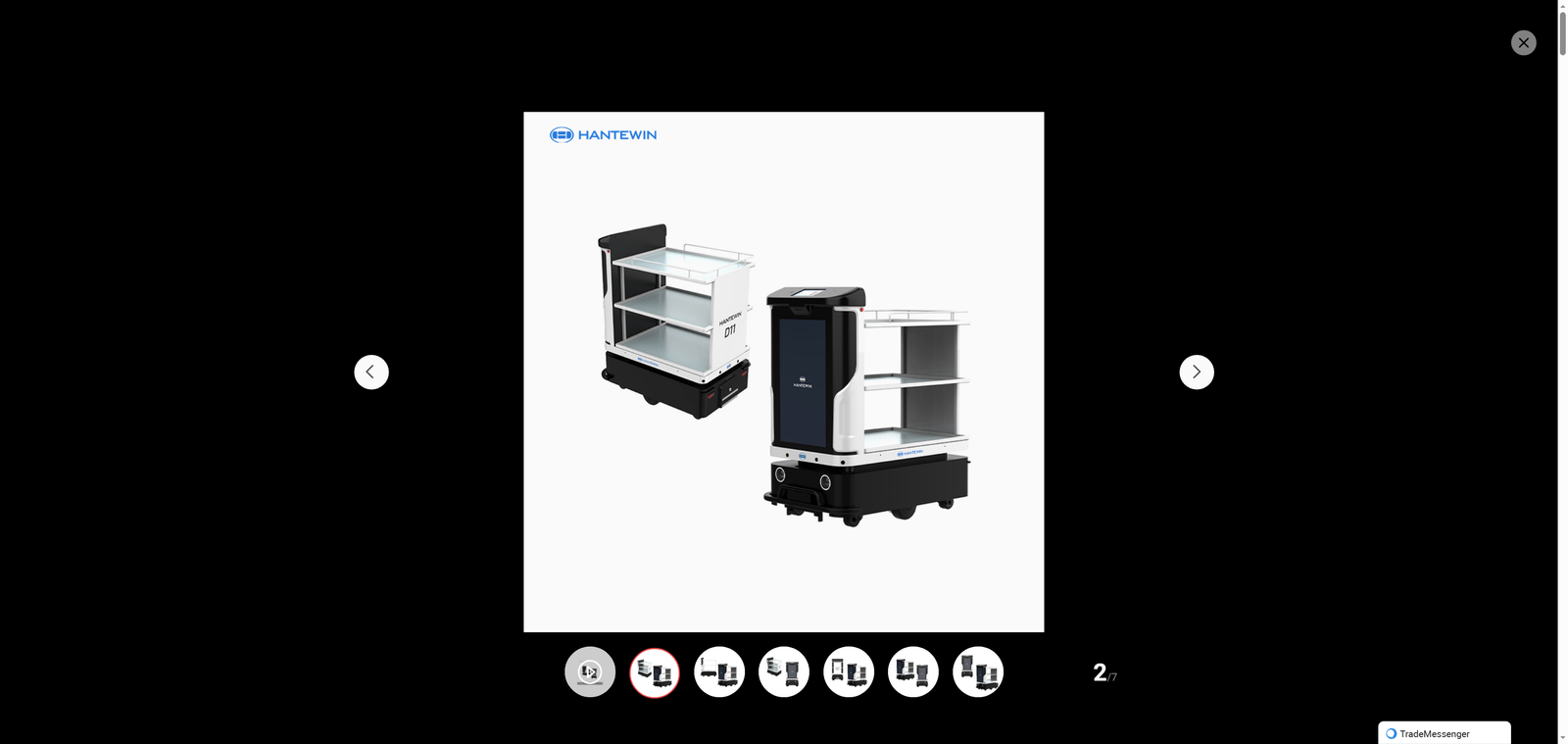
In the era of digital transformation, the catering and hotel industries are undergoing a profound revolution driven by intelligence. Faced with the dual challenges of rising labor costs and increasing consumer demand for high-quality services, customized intelligent smart service delivery robots have emerged as a key solution to optimize operational efficiency and enhance service experience. These robots, tailored to the unique scenarios of restaurants and hotels, integrate advanced technologies such as artificial intelligence (AI), Internet of Things (IoT), and autonomous navigation, gradually becoming an indispensable part of the modern service industry ecosystem.
The rise of customized intelligent service delivery robots is closely linked to the pain points of the catering and hotel industries. In restaurants, especially during peak hours, the shortage of waiters often leads to delayed order delivery, long customer waiting times, and increased service errors, which directly affect customer satisfaction. In hotels, from guest room delivery of daily necessities to meal delivery and public area guidance, the traditional manual service model is limited by labor intensity and working hours, making it difficult to achieve 24-hour efficient service. Against this background, customized intelligent service delivery robots, with their advantages of high efficiency, stability, and personalization, have become the preferred choice for many catering and hotel enterprises to upgrade their services.
Compared with ordinary service robots, customized intelligent smart service delivery robots have more prominent advantages in adapting to the specific needs of restaurants and hotels. Firstly, in terms of functional customization, they can be tailored according to the business characteristics of different venues. For restaurants, the robots can be equipped with intelligent order-taking modules, automatic meal delivery shelves, and table number recognition functions. They can accurately receive customer orders, automatically navigate to the kitchen to pick up meals, and then send them to the designated table, realizing the full process of "order-taking - meal preparation - delivery" without manual intervention. For hotels, the robots can be designed with guest room delivery boxes, identity verification functions, and intelligent guidance systems. They can deliver towels, mineral water and other items to the guest room door according to the guest's request, and can also guide guests to the restaurant, gym and other areas, reducing the workload of the front desk and service staff.
Secondly, in terms of technical configuration, customized intelligent service delivery robots adopt advanced autonomous navigation and obstacle avoidance technology, which can flexibly adapt to the complex environment of restaurants and hotels. Whether it is the crowded dining area of a restaurant, the narrow corridor of a hotel, or the sudden appearance of pedestrians and objects, the robot can quickly sense the surrounding environment through sensors such as lidar and cameras, plan the optimal path in real time, and avoid obstacles smoothly, ensuring the safety and efficiency of service delivery. At the same time, the robots are equipped with intelligent voice interaction modules, which can communicate with customers in multiple languages, answer common questions, and even provide personalized services such as recommending dishes and introducing hotel facilities, enhancing the interactive experience of customers.
The application of customized intelligent smart service delivery robots has brought tangible benefits to the catering and hotel industries. In terms of operational efficiency, the robots can work continuously for 24 hours without rest, which greatly improves the service capacity of the venue. Taking a medium-sized restaurant as an example, one service robot can replace 2-3 waiters' work in meal delivery, reducing the labor cost by 30%-50% for the restaurant. In hotels, the robot can complete the delivery task in 5-10 minutes, which is much faster than the manual delivery time, and effectively solves the problem of slow service during off-peak hours. In terms of service quality, the robot's standardized operation avoids service errors caused by human factors, such as wrong order delivery and missed orders, and ensures the consistency and stability of service. In addition, the novel form of intelligent robots can also become a unique "check-in point" for venues, attracting young customers to visit and consume, and enhancing the brand image of enterprises.
In practical application scenarios, customized intelligent service delivery robots have shown strong adaptability and practical value. In high-end restaurants, the robots with elegant appearance and gentle voice interaction can provide intimate service for customers, matching the high-end positioning of the restaurant; in fast-food restaurants, the robots with high load-bearing capacity and fast delivery speed can meet the needs of large passenger flow and fast turnover; in boutique hotels, the robots with small size and quiet operation can deliver services without disturbing guests, maintaining the quiet and comfortable environment of the hotel; in large resort hotels, the robots with long battery life and strong navigation ability can shuttle between different buildings to complete multi-scenario service tasks.
Looking to the future, with the continuous progress of AI, 5G and other technologies, customized intelligent smart service delivery robots will have a broader development space. On the one hand, the function of the robot will be more diversified. It will not only complete delivery and guidance tasks, but also gradually involve in more complex service links, such as table cleaning, room cleaning, and even simple cooking assistance, further liberating human labor. On the other hand, the customization level of the robot will be higher. It can realize more precise service matching according to the consumption habits of different customers and the business characteristics of different venues, and even achieve "one store, one robot" personalized customization. In addition, the interconnection between robots and the intelligent management system of venues will be more close, realizing data sharing and collaborative work, helping enterprises to carry out refined management and improve operational decision-making efficiency.
However, it should be noted that the popularization and application of customized intelligent service delivery robots also face some challenges, such as high initial investment cost, imperfect after-sales service system, and some customers' acceptance of intelligent service. For this reason, enterprises need to reasonably choose robot products according to their own operational needs and economic strength, and strengthen the training of staff to ensure the smooth use of robots. At the same time, robot manufacturers should continuously reduce production costs, improve product quality and after-sales service, and promote the popularization of intelligent service robots in the catering and hotel industries.
In conclusion, customized intelligent smart service delivery robots, as a product of the integration of intelligence and the service industry, have become an important driving force for the transformation and upgrading of the catering and hotel industries. They not only solve the pain points of high labor costs and low service efficiency in traditional industries, but also bring a new service experience to customers, promoting the high-quality development of the service industry. With the continuous innovation of technology and the gradual maturity of the market, customized intelligent service delivery robots will play a more important role in the future, creating a more efficient, intelligent and humanized service environment for the catering and hotel industries.