
In the era of digital transformation, the service industry is undergoing a profound revolution driven by intelligent technology. Among them, commercial intelligent welcome and reception service robots have emerged as a key force in upgrading the service experience of hotels and restaurants. These intelligent devices, integrated with advanced technologies such as artificial intelligence, Internet of Things and automatic navigation, are no longer just novel decorations, but have become practical assistants that optimize service processes, improve operational efficiency and enhance customer satisfaction. From the moment customers step into the lobby of a high-end hotel to the time they are seated in a bustling restaurant, intelligent welcome and reception robots are redefining the first impression of service with their professional and efficient performance.
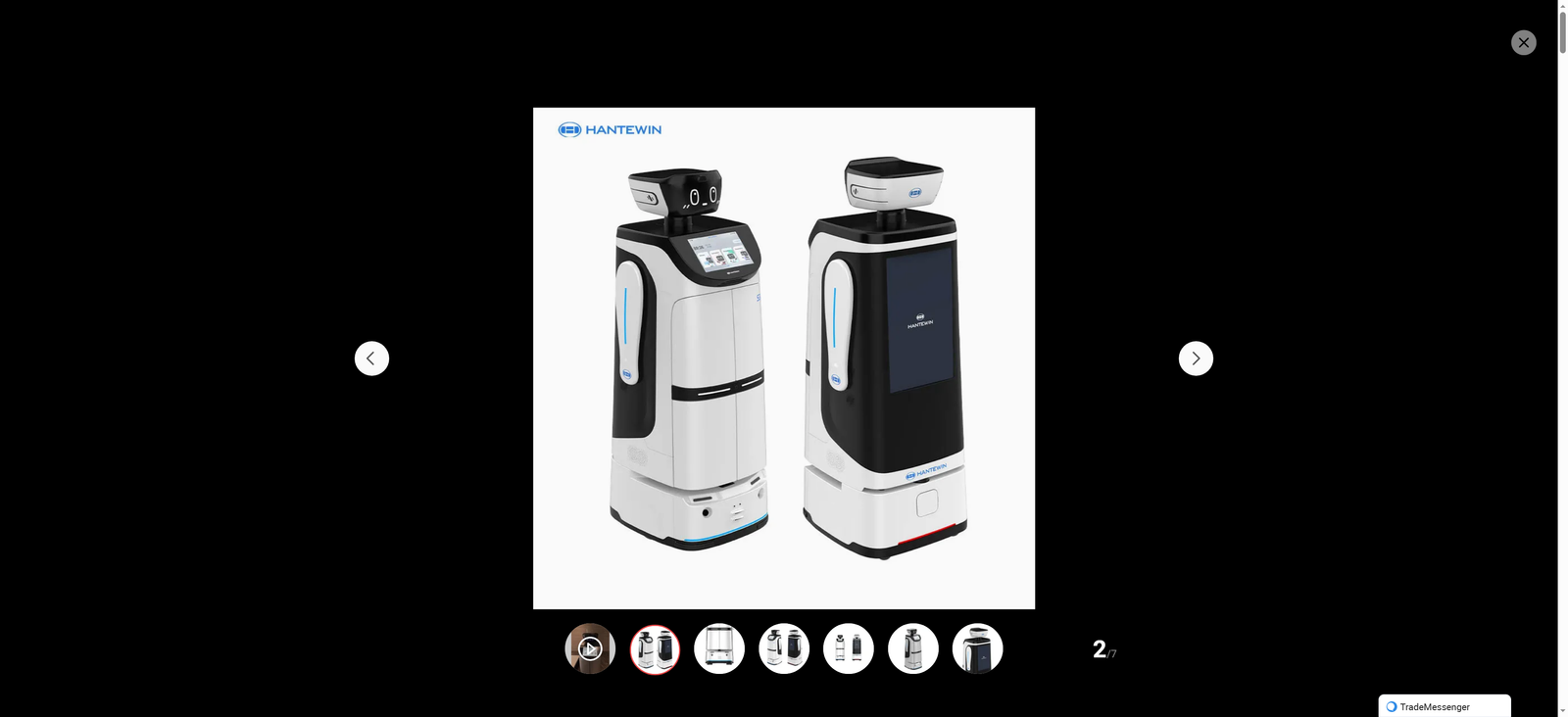
The core value of commercial intelligent welcome and reception robots in hotel and restaurant scenarios lies in their ability to accurately and efficiently undertake a series of front-end service tasks, effectively making up for the shortcomings of traditional manual services. In terms of welcome and guidance, unlike manual receptionists who may be distracted by multiple tasks, intelligent robots can maintain a consistent and friendly service attitude 24 hours a day. They can quickly identify customers through visual recognition technology, take the initiative to greet them with personalized words, and provide accurate route guidance according to the customers' needs—whether it is leading guests to the front desk for check-in, guiding them to the restaurant's reserved seats, or pointing out the location of facilities such as restrooms and elevators. This not only reduces the waiting time of customers but also alleviates the workload of the service staff, allowing them to focus more on providing in-depth and personalized services that require human care.
Beyond basic welcome and guidance, commercial intelligent welcome and reception robots are also equipped with a variety of practical functions to enrich the service connotation. In hotels, they can assist in checking the availability of rooms, introducing hotel facilities and services (such as breakfast time, gym opening hours, etc.), and even sending room cards and small items to guests' rooms through automatic navigation. In restaurants, they can help customers check the menu, recommend signature dishes according to dietary preferences or seasonal characteristics, and guide customers to queue up and take numbers, effectively optimizing the dining peak experience. Some high-end models are also equipped with multilingual interaction capabilities, which can seamlessly communicate with foreign customers, breaking down language barriers and enhancing the international service level of hotels and restaurants. In addition, these robots can collect customer interaction data in real time, such as the frequency of inquiries about certain services, customer preferences for dishes, etc., and provide valuable data support for the operation and management decisions of hotels and restaurants.
The stable operation of commercial intelligent welcome and reception robots relies on the support of a series of advanced technologies. Automatic navigation and obstacle avoidance technology is the basis for their free movement in complex environments such as hotel lobbies and restaurant halls. By integrating sensors, cameras and SLAM (simultaneous localization and mapping) technology, the robots can accurately perceive the surrounding environment, plan the optimal movement route in real time, and flexibly avoid obstacles such as pedestrians and furniture. Artificial intelligence and natural language processing technology enable robots to understand customer intentions accurately and respond to inquiries in a natural and smooth manner, rather than just rigidly outputting preset answers. The Internet of Things technology realizes the data connection between the robot and the hotel's PMS (property management system) and the restaurant's POS (point-of-sale system), allowing the robot to obtain real-time information such as room status and menu updates, and ensuring the accuracy and timeliness of services. With the continuous progress of technologies such as 5G and cloud computing, the computing power and data processing capabilities of intelligent robots will be further enhanced, laying a solid foundation for more complex service scenarios.
Looking to the future, commercial intelligent welcome and reception robots will play an even more important role in the hotel and restaurant industry, showing a trend of diversification, personalization and integration. On the one hand, the functions of robots will be more refined and specialized—for example, some robots may be specialized in providing butler-style welcome services for high-end hotels, while others may focus on intelligent queuing and order recommendation for fast-food restaurants. On the other hand, the integration of robots with other intelligent devices (such as smart door locks, smart ordering systems) will be further deepened, forming a full-link intelligent service chain that covers from customer arrival to departure. In addition, with the continuous improvement of emotional interaction technology, future robots may be able to perceive customers' emotional states through facial expressions and voice intonations, and adjust service strategies accordingly, making the service more humanized. It should be emphasized that the popularization of intelligent robots does not mean replacing human services, but forming a complementary relationship with human services—robots undertake repetitive and procedural tasks, while humans focus on emotional communication and personalized needs, jointly creating a more efficient and warm service experience.
In conclusion, commercial intelligent welcome and reception service robots are bringing a profound transformation to the hotel and restaurant industry with their unique advantages of efficiency, stability and intelligence. They not only optimize the operational efficiency of enterprises and reduce service costs but also upgrade the customer's service experience, becoming an important symbol of the intelligent upgrading of the service industry. With the continuous innovation and development of technology, these intelligent service partners will surely inject more vitality into the hotel and restaurant industry, helping the industry move towards a more intelligent, personalized and high-quality development direction.