
Commercial-Grade Food Delivery Robots: Transforming Service Efficiency in Restaurants and Hotels
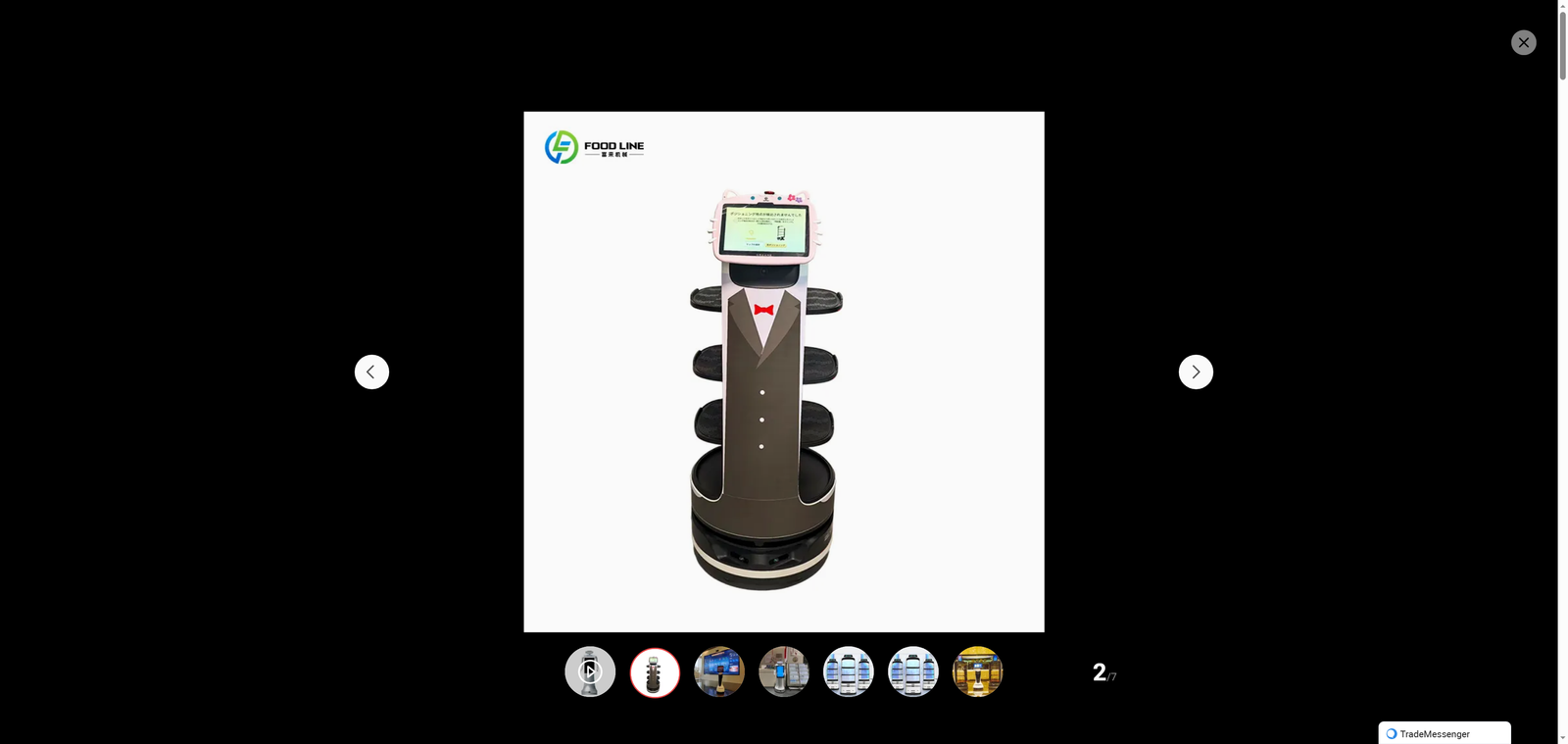
In the era of intelligent commercial services, the demand for high efficiency, standardization and cost control has driven the rapid development of service robots. Among them, commercial-grade restaurant-specific and hotel room food delivery robots have emerged as a key force reshaping the service ecology of the catering and hotel industries. Different from consumer-grade or industrial robots, these robots are designed and optimized for the complex and high-frequency service scenarios of restaurants and hotels, with the core advantages of stability, durability, and scenario adaptability. They are not only tools to replace manual labor, but also important carriers to upgrade service quality and build brand competitiveness.
The rise of commercial-grade food delivery robots is closely linked to the pain points of the current restaurant and hotel industries. For restaurants, especially large-scale catering chains, food courts, and high-traffic restaurants, the peak period of dining often brings enormous pressure to the service team. The problems of insufficient waiters, slow food delivery, easy order mixing, and high labor costs have long plagued operators. For hotels, room service—such as delivering meals, fruits, mineral water, or daily necessities—requires 24-hour response, and the efficiency and standardization of service directly affect guests’ satisfaction. However, traditional manual service is prone to delays due to personnel scheduling, fatigue, or human error, which is difficult to meet the increasingly personalized and efficient service needs of consumers.
Against this background, commercial-grade restaurant-specific and hotel room food delivery robots have been tailor-made to solve these pain points. Compared with ordinary food delivery robots, their "commercial-grade" attributes are reflected in all aspects. In terms of hardware, they adopt high-strength, wear-resistant materials to adapt to the busy and crowded environment of restaurants and hotels, and are equipped with high-precision navigation and obstacle avoidance systems—such as laser SLAM, visual navigation, and multi-sensor fusion technology—to accurately identify paths, avoid diners, waiters, or furniture, and ensure stable operation even in complex scenarios. In terms of battery life, they are equipped with large-capacity batteries and support fast charging, which can meet the 24-hour continuous work needs of commercial scenarios without frequent charging affecting service efficiency.
For restaurant scenarios, the design of food delivery robots is more focused on "efficient meal delivery and order accuracy". They can be seamlessly connected to the restaurant’s POS system, and after the customer places an order, the robot will automatically receive the order, go to the kitchen to pick up the meal, and accurately deliver it to the corresponding table according to the order information. During the delivery process, the robot can automatically call the elevator, remind diners to avoid with voice broadcasts, and even complete the function of returning empty plates after meals. For large restaurants or food courts, multiple robots can work collaboratively, and the background system can intelligently schedule tasks to avoid conflicts and maximize delivery efficiency. In addition, some high-end restaurant robots are also equipped with interactive functions, which can answer simple customer questions, recommend dishes, or play promotional videos, adding a sense of technology and fun to the dining experience.
For hotel room service scenarios, food delivery robots pay more attention to "privacy protection, quiet operation and service standardization". Guests can place orders through the hotel’s smart TV, mobile app, or phone, and the robot will receive the order and deliver the corresponding items to the door of the designated room. During the delivery process, the robot will move quietly to avoid disturbing other guests, and can automatically authenticate through the hotel’s access control system to enter the elevator and reach the corresponding floor. When arriving at the room door, the robot will send a reminder to the guest through a message or voice, and after the guest takes the items, it will automatically return to the base station for charging or wait for the next task. This not only improves the efficiency of room service, reduces the workload of hotel attendants, but also avoids the inconvenience caused by manual door-to-door service to guests’ privacy, and enhances the sense of security and comfort of guests.
The popularization and application of commercial-grade food delivery robots have brought tangible benefits to restaurants and hotels. On the one hand, they significantly reduce labor costs—operators can reduce the number of waiters or room attendants, and transfer human resources to more valuable services, such as customer consultation, experience guidance, or personalized services. On the other hand, they improve service efficiency and quality: the robot can deliver meals or items accurately and quickly without being affected by emotions, fatigue, or human error, reducing the probability of order mixing and service delays, and improving customer satisfaction and repurchase rate. In addition, the intelligent management system of the robot can collect service data in real time—such as delivery time, order quantity, and robot operation status—providing data support for operators to optimize service processes and adjust business strategies.
Of course, the development of commercial-grade food delivery robots is still facing some challenges. For example, the initial investment cost is relatively high, which may bring certain pressure to small and medium-sized restaurants or hotels; in some extreme scenarios—such as narrow corridors, sudden obstacles, or complex human-computer interactions—the robot’s adaptability still needs to be improved; in addition, some consumers may still prefer manual service, and there is a process of adapting to the intelligent service mode. However, with the continuous progress of technology, the cost of robots is gradually reducing, and their functions and adaptability are constantly optimized. More and more restaurants and hotels have realized the long-term value of intelligent robots and begun to introduce them into their service systems.
Looking to the future, commercial-grade restaurant-specific and hotel room food delivery robots will develop in the direction of more intelligence, diversification, and humanization. With the integration of artificial intelligence, big data, and the Internet of Things technology, they will not only complete simple food delivery tasks, but also realize more complex functions—such as intelligent meal preparation reminders, personalized service recommendations, and fault self-diagnosis. At the same time, the appearance design of the robot will be more in line with the brand positioning of restaurants and hotels, becoming a part of the store’s image display. In addition, cross-scenario integration will become a new trend—robots can not only deliver food in restaurants and hotels, but also undertake tasks such as cleaning, guiding, and receiving, forming a full-scenario intelligent service solution.
In conclusion, commercial-grade restaurant-specific and hotel room food delivery robots are not only a product of technological progress, but also a inevitable choice for the transformation and upgrading of the catering and hotel industries. They are changing the traditional service mode with efficient, stable and standardized service capabilities, reducing operating costs for operators, and improving consumer experience. As technology continues to iterate and the market demand continues to expand, these robots will play an increasingly important role in the commercial service field, creating a more intelligent, efficient and high-quality service ecology for the catering and hotel industries.