
With the rapid development of artificial intelligence and smart technology, the service industry is undergoing a profound transformation. Among them, commercial delivery robot waiters—especially intelligent food delivery robots tailored for restaurants and hotels—have gradually stepped out of the scope of technological experiments and become an indispensable part of modern service scenarios. These smart robots are not only a symbol of technological progress, but also a powerful driving force for optimizing service efficiency, improving user experience and promoting industrial upgrading. They are quietly reshaping the operational logic and service ecology of the catering and hotel industries.
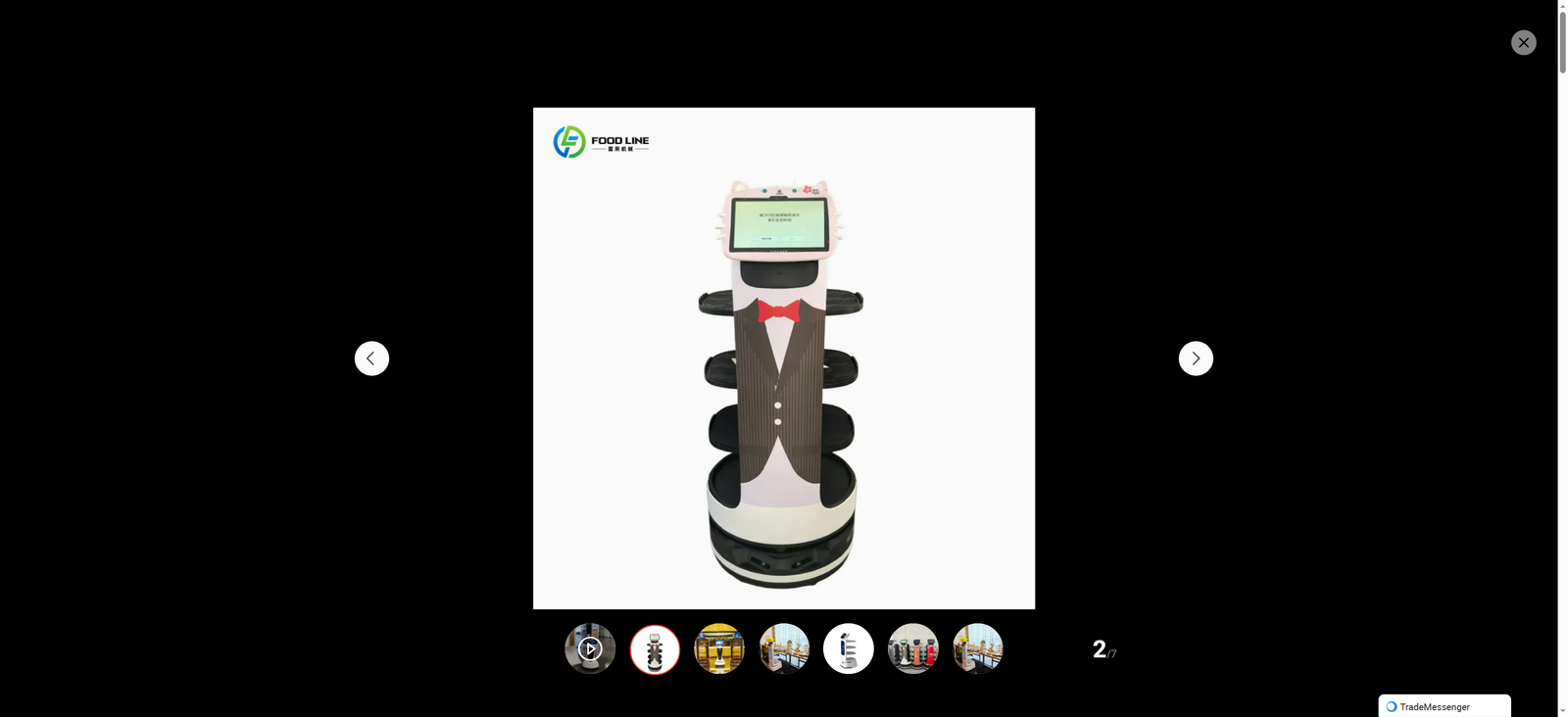
Commercial intelligent food delivery robots are equipped with advanced core technologies such as laser navigation, visual recognition, obstacle avoidance systems and intelligent scheduling algorithms, which enable them to complete a series of service tasks independently and efficiently in complex and dynamic environments such as restaurants and hotels. Unlike traditional manual services, these smart robots have the characteristics of high stability, strong continuity and zero error in repeated work, which fundamentally solves the pain points of the service industry such as labor shortage, high labor cost, uneven service quality and easy fatigue of employees.
In restaurant scenarios, intelligent food delivery robots have become the "new partners" of waiters, undertaking multiple links from order taking to food delivery and table cleaning. When customers enter the restaurant, they can complete order selection and payment through the touch screen on the robot, and the order information will be synchronized to the kitchen in real time. After the dishes are prepared, the robot will receive the instruction and accurately navigate to the kitchen window, take the dishes with its stable carrying platform, and then quickly and safely send them to the designated table according to the optimal path planned by the system. During the delivery process, the robot can flexibly avoid pedestrians, tables and chairs, and even automatically decelerate and remind when encountering obstacles, ensuring the safety of the dishes. After customers finish their meals, the robot can also be arranged to collect tableware and clean the table surface, which greatly reduces the workload of waiters and allows them to focus more on providing personalized services such as dish introduction and customer consultation, thereby improving the overall service quality and customer satisfaction.
In hotel scenarios, commercial delivery robots show equally excellent performance, breaking through the limitations of traditional hotel service time and space. Guests can place orders for daily necessities such as mineral water, towels and toothbrushes, or food and beverages through the hotel APP or the intelligent terminal in the room, and the robot will complete the delivery task 24 hours a day. Whether it is late at night or early in the morning, guests do not need to wait for the service staff to arrive, and can receive the required items in a short time. The robot can independently navigate to the designated floor and room through the elevator interconnection system, and after arriving at the door, it will remind guests to pick up the items through voice broadcast. After the delivery is completed, it will automatically return to the charging station for charging, realizing full-process unmanned operation. This not only improves the efficiency of hotel services and reduces the labor cost of the hotel, but also meets the needs of guests for private and fast services, enhancing the hotel's intelligent image and core competitiveness.
In addition to improving service efficiency and reducing costs, commercial intelligent food delivery robots also bring more new possibilities to the catering and hotel industries. For merchants, the data accumulated by robots in the process of operation, such as customer order preferences, peak service periods and flow distribution, can be analyzed and sorted out to provide scientific basis for merchants to adjust menu structure, optimize store layout and arrange staff shifts. At the same time, the novel intelligent service form can also become a "net red check-in point" for merchants, attracting more young consumers to visit and consume through word of mouth communication and social media sharing, bringing additional traffic and income to merchants.
Of course, the popularization and application of commercial intelligent food delivery robots is not without challenges. At present, there are still some problems such as high initial investment cost, limited adaptability to complex scenarios and imperfect after-sales service system. However, with the continuous progress of technology and the expansion of market demand, these problems will be gradually solved. More and more enterprises are increasing investment in R&D, optimizing the performance and function of robots, reducing production costs, and promoting the popularization of intelligent delivery robots in more service scenarios.
Looking to the future, commercial delivery robot waiters and intelligent food delivery robots will become the standard configuration of the catering and hotel industries, and will develop in a more intelligent, humanized and diversified direction. They will not only be limited to food and item delivery, but also integrate more functions such as guide services, information consultation and entertainment interaction, forming a more perfect intelligent service chain. With the deep integration of smart robots and the service industry, the catering and hotel industries will enter a new era of efficient, high-quality and intelligent development, bringing better service experience to consumers and injecting strong momentum into the high-quality development of the service industry.