
Collision-Resistant and Bump-Proof: The New Standard of Safe Delivery Robots for Commercial Scenarios
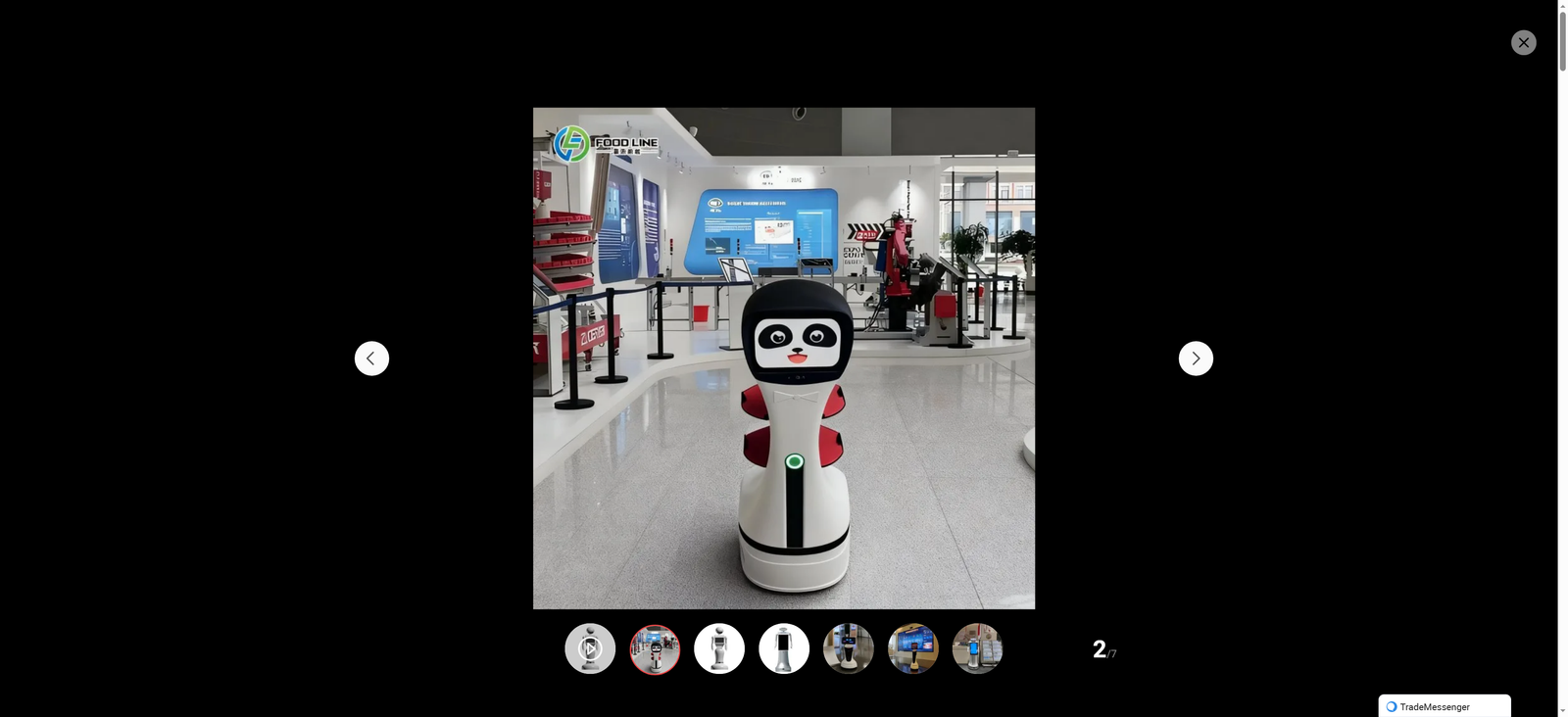
In the era of intelligent logistics and service upgrading, delivery robots have become a core tool for businesses to improve efficiency and reduce costs. However, in crowded commercial environments such as restaurants, warehouses, and office buildings, collision risks between robots and humans, objects, or even other equipment have become a key concern restricting their large-scale application. Against this background, collision-resistant and bump-proof safe delivery robots have emerged, redefining the safety benchmark of the industry with advanced technology and humanized design.
Core Technology: Building a Multi-Layered Safety Defense System
The safety performance of collision-resistant and bump-proof delivery robots relies on the organic combination of hardware configuration and intelligent algorithms, forming a full-chain protection from perception to response.
Precision Perception: Early Warning of Risks in Complex Environments
Equipped with high-performance sensing equipment, these robots can achieve 360-degree all-round environmental detection to eliminate blind spots. The integration of lidar, stereo vision sensors, and RGB cameras enables real-time identification of obstacles of different sizes, shapes, and materials—whether it is a moving pedestrian, a fixed table and chair, or a small object such as a fallen carton. For example, the TF-NOVA laser radar with a 14° horizontal field of view can form a 48cm-wide detection area 2 meters ahead, accurately capturing small targets as small as 5cm² with 10% reflectivity without missing detection, providing sufficient reaction time for subsequent operations . In addition, specialized anti-fall sensors detect steps and depressions in real time, avoiding potential falls and secondary collisions caused by equipment tilting.
2. Intelligent Response: Flexible Avoidance and Gentle Buffering
Unlike traditional robots that only rely on emergency braking, collision-resistant and bump-proof models adopt a "prevention mitigation" dual strategy. When an obstacle is detected, the robot first adjusts its speed according to the distance—slowly decelerating within 2-5 meters and emergency stopping within 2 meters to avoid sudden braking impacts . For narrow spaces or sudden obstacles, the V-SLAM 2.0 autonomous navigation algorithm can quickly plan an optimal detour route, ensuring smooth passage without affecting delivery efficiency .
In terms of bump-proof design, the robot is equipped with a professional shock absorption structure. The arc-shaped anti-collision devices on both sides of the body can translate inward through the movable rotor and spring groove when subjected to external force, converting rigid collision into sliding friction to guide the robot to deviate from the collision direction . The top corner limit device is equipped with a shock absorber and a spring buffer block, which can disperse impact force through elastic deformation when collided, protecting both the robot body and the carried goods . The vehicle-grade independent suspension chassis and multi-link damping system further enhance stability, ensuring that the goods remain stable without spilling even on uneven ground .
3. Compliance Design: Meeting Strict Industry Safety Standards
To ensure universal applicability in commercial scenarios, these robots fully comply with international and national safety standards. In accordance with GB/T 37395-2019, the maximum running speed is controlled within 0.8m/s, the noise level is less than 60dB, and an easily accessible emergency stop button is configured to ensure immediate shutdown in case of danger . The battery management system has multiple protections such as overcharge, over-discharge, and temperature control, and can withstand 1000V AC voltage tests to avoid electrical safety hazards . The body shell can resist 0.5J impact energy, and remains stable without tipping when tilted 10° statically, adapting to the harsh operating environment of commercial scenes .
Scenario Empowerment: Creating Safe Value for Diversified Businesses
The collision-resistant and bump-proof design makes delivery robots widely applicable in various commercial scenarios, solving safety pain points for different industries.
Warehousing and Logistics: Efficient Operation Without Damage
In large warehouses and e-commerce logistics centers, the robot can safely shuttle between shelves with a load capacity of up to 150kg . The anti-collision device on the fork can accurately detect the distance between the fork and the goods, avoiding damage to bulk goods and heavy components caused by collision. The multi-robot collaboration algorithm enables automatic avoidance and path optimization when multiple robots meet at intersections, improving the overall operation efficiency of the warehouse by 2-3 times while ensuring safety .
Catering and Hotels: Safe Delivery with a Good Experience
In crowded restaurants and hotels, the robot can flexibly pass through 59cm narrow passages, and the 300° dynamic obstacle detection range can effectively avoid collisions with diners and waiters . The stable shock absorption system ensures that drinks and food are not spilled during delivery, and the拟人 (anthropomorphic) interactive design with voice prompts and light reminders further reduces the risk of accidental collision. The low-noise operation does not interfere with the dining environment, creating a comfortable experience for customers .
Office Buildings and Hospitals: Precision Service with Safety Priority
In scenarios with high safety requirements such as office buildings and hospitals, the robot's precise obstacle avoidance capability ensures the safe delivery of documents, medicines, and medical supplies. The emergency stop function and reliable braking performance can respond to sudden situations in a timely manner, avoiding potential risks to staff and patients. The waterproof and anti-collision body design also adapts to the frequent cleaning and wet ground environment of hospitals.
Future Trend: Safety-Driven Intelligent Upgrade
With the continuous deepening of intelligent transformation, businesses' demand for the safety of delivery robots is becoming more and more stringent. Collision-resistant and bump-proof technologies will develop in the direction of higher precision, faster response, and stronger adaptability—integrating AI recognition algorithms to distinguish between static and dynamic obstacles more intelligently, and optimizing the shock absorption structure to adapt to more complex terrain. At the same time, the combination of cloud scheduling systems will realize global safety management of multi-scenario robots, building a more reliable intelligent delivery ecosystem.
As an important carrier of intelligent services, collision-resistant and bump-proof safe delivery robots not only solve the pain points of commercial operation safety but also lay a solid foundation for the large-scale popularization of delivery robots. For businesses, choosing such robots means choosing efficient, stable, and safe operation mode, helping enterprises achieve cost reduction and efficiency improvement in the fierce market competition while creating a safer environment for employees and customers.