
Cloud Based Delivery Assistant: The New Engine of Autonomous Restaurant Serving Robots
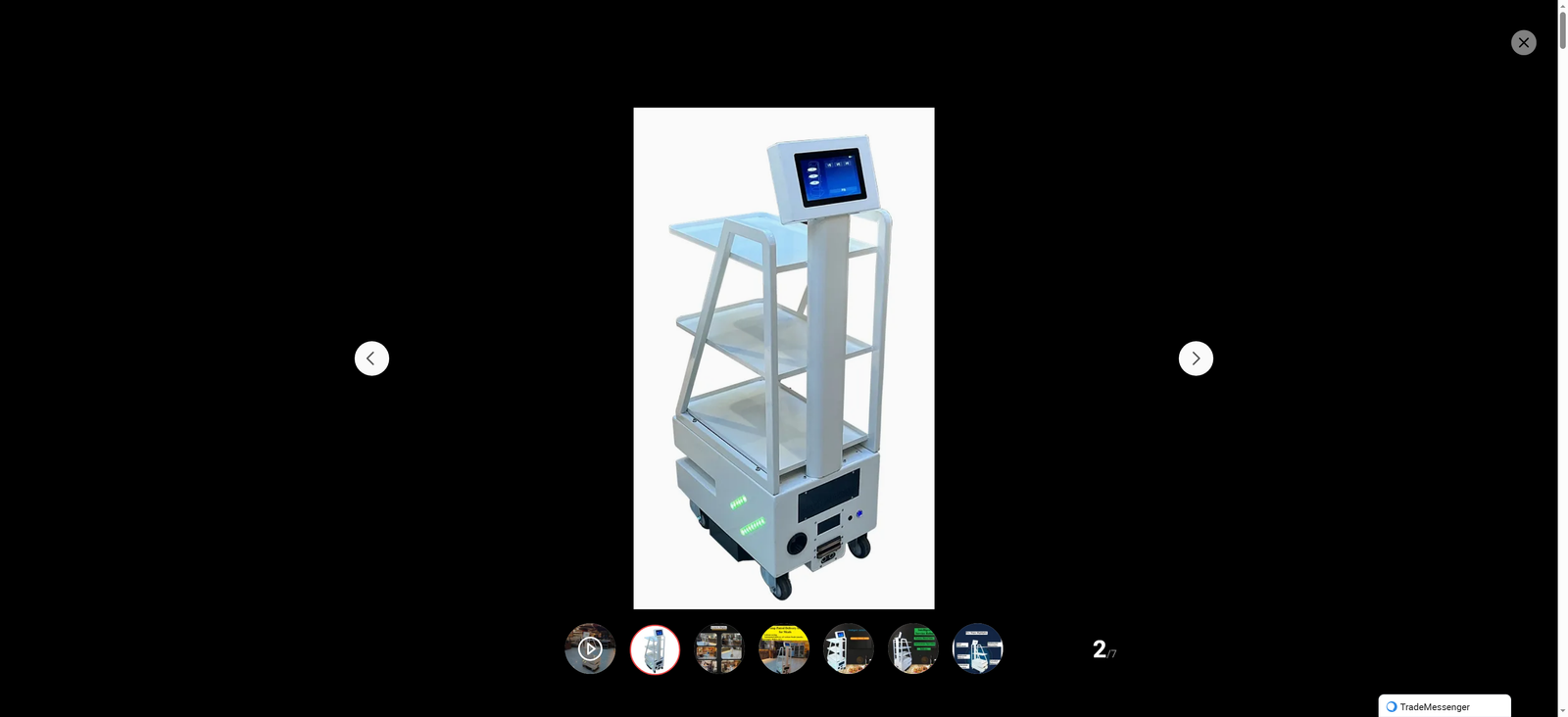
In the wave of digital transformation sweeping the catering industry, autonomous serving robots have evolved from experimental novelties to essential tools for efficiency improvement. Behind this leap, the integration of cloud-based delivery assistants has become a core driving force, redefining the operational logic of intelligent catering services. This combination not only solves the pain points of traditional catering such as labor shortages and inefficient operations but also builds a new ecology of "automation data intelligence" for the industry.
The core value of cloud-based delivery assistants lies in breaking the operational limitations of standalone autonomous robots, realizing centralized management and intelligent scheduling of the entire service chain. Unlike early robots that relied on pre-set paths and local programming, modern autonomous serving robots, supported by cloud assistants, form a collaborative network. The cloud platform acts as a "central nervous system," collecting real-time data from multiple robots—including location, battery level, task progress, and environmental obstacles—then optimizing delivery routes and task assignments through AI algorithms. For example, in a busy restaurant during peak hours, the cloud assistant can dynamically adjust the workload of each robot based on order density, avoiding path conflicts and reducing customer waiting time. This centralized scheduling capability has increased the overall delivery efficiency of robot teams by 40% to 60% compared to standalone operations, according to industry research.
Technological integration is the cornerstone of the symbiosis between cloud-based delivery assistants and autonomous serving robots. The cloud assistant relies on advanced technologies such as the Internet of Things (IoT), machine vision, and big data analytics to empower robots with more precise and flexible service capabilities. Through IoT sensors, robots can upload real-time operational status to the cloud, enabling remote monitoring and predictive maintenance—cloud platforms can alert staff in advance when a robot's battery is low or a component malfunctions, minimizing downtime. Machine vision technology, combined with cloud-based data processing, enhances robots' environmental adaptation: they can accurately identify dynamic obstacles such as moving customers or waiters, adjust paths in real time, and even recognize different tableware to ensure stable food delivery. Additionally, cloud assistants support seamless integration with restaurant management systems, connecting order reception, kitchen preparation, and table delivery into a closed loop—once a dish is ready, the kitchen system triggers the cloud assistant to dispatch the nearest robot for pickup and delivery, eliminating manual coordination errors.
In practical application scenarios, the combination of cloud-based delivery assistants and autonomous serving robots has achieved remarkable results across diverse catering formats. In large-scale venues such as technology parks and shopping malls, cloud-driven robot systems have realized full-process automation from meal delivery to tableware recycling. For instance, Hubo Robot Group's park-level intelligent restaurant solution uses a cloud-track delivery system: when a dish is prepared in the kitchen, the cloud assistant activates the aerial rail robot to deliver it accurately to the designated window, and after dining, AI vision identifies used tableware, which is then transported to the dishwashing room via cloud-coordinated robots, achieving a contactless full cycle. In 24-hour catering outlets, cloud-based assistants enable robots to provide uninterrupted services—coffee robots, noodle-making robots, and serving robots collaborate under cloud scheduling, meeting the late-night dining needs of office workers while reducing labor costs by over 30%. Even in high-end catering, this combination adopts a human-machine collaboration model: cloud assistants handle routine delivery tasks, allowing human staff to focus on personalized services such as dish introduction, enhancing both efficiency and customer experience.
Beyond operational efficiency, cloud-based delivery assistants unlock data-driven management capabilities for catering businesses. The cloud platform accumulates massive operational data, including order volume, peak customer flow, popular dishes, and robot service efficiency. Through big data analytics, it generates real-time business dashboards for operators, providing panoramic insights into operational status. For example, the cloud assistant can predict peak periods based on historical data, pre-adjust robot deployment and food preparation quantities; it can also identify underperforming dishes through sales data and recommend optimization to the kitchen. This data-driven approach transforms traditional experience-based management into precise operations, helping restaurants reduce food waste, optimize inventory, and implement personalized marketing strategies—ultimately improving profit margins and customer loyalty.
Despite its remarkable advantages, the development of cloud-based autonomous serving robots still faces challenges. Technically, the accuracy of robot recognition in complex environments (such as crowded restaurants or uneven floors) needs improvement, and the stability of cloud-robot communication requires further enhancement to avoid delays in critical scenarios. Commercially, the initial investment and subsequent maintenance costs of cloud systems and robot hardware remain barriers for small and medium-sized catering businesses, though the "Robot-as-a-Service (RaaS)" subscription model is gradually reducing this threshold by shortening the return on investment cycle to around 14 months. Ethically and regulatory, issues such as data privacy protection (e.g., customer dining behavior data stored in the cloud) and labor structure impacts need to be addressed through improved industry standards and regulatory frameworks.
Looking ahead, the integration of cloud-based delivery assistants and autonomous restaurant serving robots will move toward deeper intelligence and scenario diversification. With the advancement of 5G and edge computing, cloud-robot communication will achieve lower latency and higher reliability, enabling robots to respond to complex tasks in real time. AI algorithms will become more sophisticated, allowing cloud assistants to not only schedule tasks but also predict customer needs—for example, recommending dishes based on customer dining history stored in the cloud. The application scope will expand beyond dine-in services to include takeout delivery coordination, connecting in-store robots with external delivery systems through the cloud to build an integrated intelligent catering network. As global market demand grows—with the global catering robot market expected to maintain a compound annual growth rate of over 25% by 2030—cloud-based delivery assistants will become the core competitive factor for autonomous serving robot solutions, leading the catering industry into a new era of efficiency, standardization, and personalization.
In conclusion, cloud-based delivery assistants are not just add-ons to autonomous restaurant serving robots but the "brain" that activates their full potential. By integrating cloud intelligence with robotic automation, the catering industry is breaking free from traditional operational constraints, achieving a win-win situation of cost reduction, efficiency improvement, and experience enhancement. As technology matures and business models innovate, this combination will continue to reshape the catering landscape, making intelligent service a new norm across the industry.