
Universal Robot Chassis Base: Vision-Intelligent Navigation Platform Trolley, Adaptable to Handling Robot Scenarios
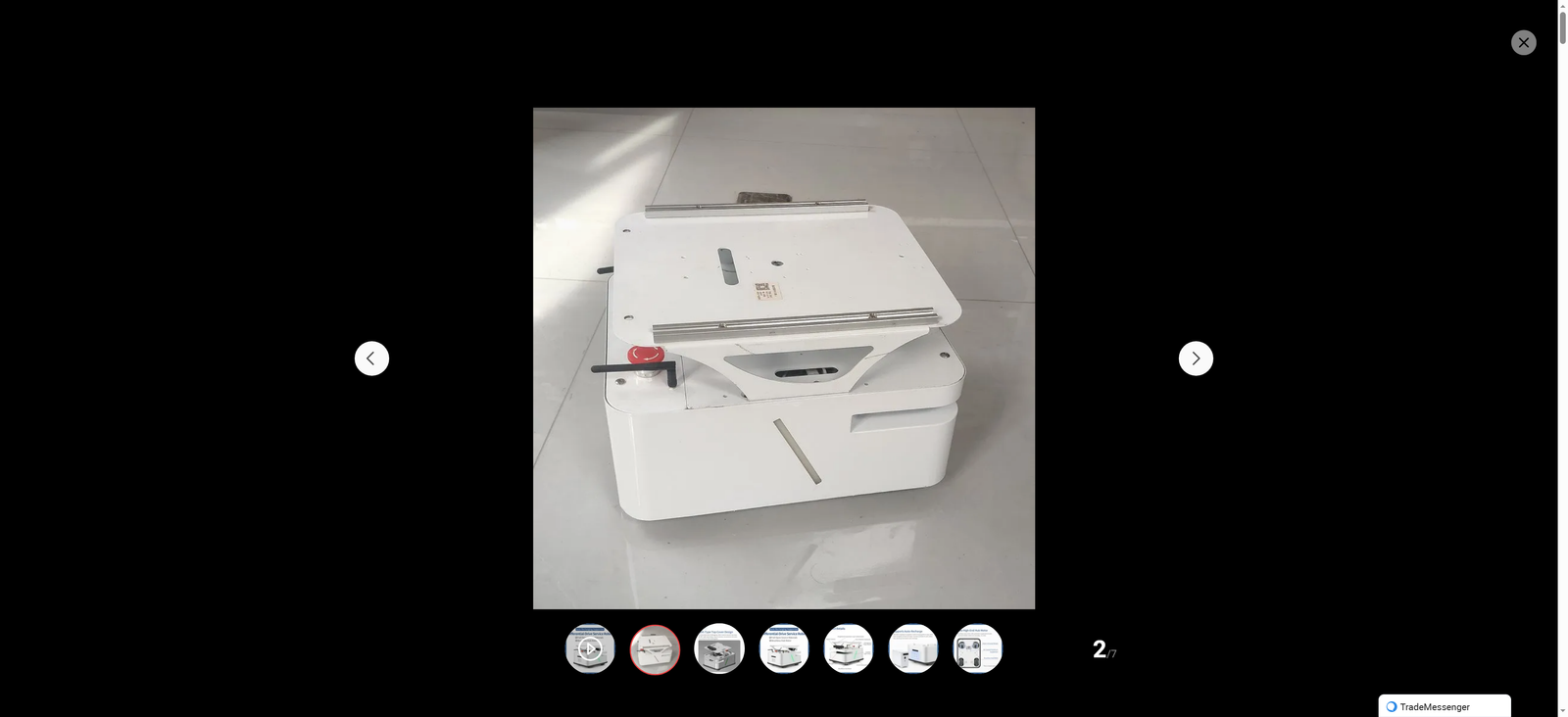
In the era of intelligent industrial and commercial transformation, the demand for automated handling solutions is soaring across various sectors. From factory production lines to warehouse logistics, from medical institutions to retail venues, efficient, flexible and reliable handling operations have become the key to improving operational efficiency and reducing labor costs. Against this backdrop, the Universal Robot Chassis Base, a vision-intelligent navigation platform trolley tailored for handling robot scenarios, has emerged as a core supporting component, empowering the upgrading of automated handling systems with its advanced technology and strong adaptability.
As the "mobile foundation" of handling robots, the universal robot chassis base undertakes the core functions of bearing, moving, navigating and positioning, and its performance directly determines the overall efficiency and stability of the handling system. Different from the traditional fixed chassis that can only adapt to a single scenario, the vision-intelligent navigation platform trolley breaks the limitations of scenario adaptation, integrating advanced vision navigation technology and a modular design concept to become a versatile "mobile platform" that can be customized for various handling needs.
The core advantage of this universal robot chassis base lies in its vision-intelligent navigation technology, which is the "brain and eyes" of the entire handling system. Adopting advanced visual SLAM (Simultaneous Localization and Mapping) technology and deep learning algorithms, the chassis can collect real-time environmental image information through built-in high-definition cameras and depth sensors, accurately identify environmental features such as corridors, shelves, obstacles and markers, and quickly construct high-precision environmental maps. Unlike traditional navigation methods that require laying magnetic tracks, QR codes or reflective plates, vision-intelligent navigation realizes truly free navigation, eliminating the need for complex environmental transformation and greatly reducing deployment costs and time consumption. Whether in narrow factory workshops, crowded warehouse aisles or dynamic commercial venues, the chassis can flexibly respond to environmental changes, automatically plan the optimal path, avoid obstacles in real time, and ensure smooth and efficient handling operations.
Another prominent feature of the universal robot chassis base is itsstrong adaptability to handling robot scenarios. With a modular and open design concept, the chassis is compatible with various types of handling robot upper structures, such as stacking mechanisms, clamping devices, and cargo platforms, which can be customized and modified according to different handling needs. Whether it is light-duty handling of electronic components and medical supplies, medium-duty transportation of production parts and semi-finished products, or heavy-duty moving of pallets and large equipment, the chassis can meet the requirements by adjusting the load capacity and structural design — its load capacity can cover a wide range from tens of kilograms to hundreds of kilograms, and some heavy-duty models can even reach a load capacity of 1000 lbs, adapting to the diverse handling needs of different industries. In addition, the chassis has excellent passability, with the ability to cross 20mm vertical obstacles and 40mm horizontal obstacles, and can pass through 60cm narrow passages without shelves, easily coping with complex terrain in handling scenarios.
In terms of performance stability and practicality, the universal robot chassis base also performs excellently. It adopts high-strength lightweight aluminum alloy or carbon fiber materials, which not only ensures the structural strength and load-bearing capacity of the chassis, but also reduces its own weight, reducing energy consumption and extending the service life of the drive system. The integrated intelligent control system realizes full-automatic operation, including automatic navigation, automatic obstacle avoidance, automatic charging, and path optimization, which can work 7x24 hours continuously — when the power is low, it can automatically return to the charging dock for fast charging, and some models can be fully charged in 2 hours, ensuring uninterrupted handling operations. At the same time, the chassis is equipped with a 360° safety protection sensor and multi-modal interaction indicators — the steering signal light lights up unilaterally when turning, and the fault indicator light displays different colors and states when a fault occurs, effectively ensuring the safety of personnel and equipment during operation. In addition, the open software and hardware interface provides rich API interfaces, supporting development environments such as Windows, Linux, ARM, ROS and C< which is convenient for users to carry out secondary development and function expansion according to their own business needs, further improving the adaptability and practical value of the chassis.
In the context of the rapid development of industrial 4.0 and intelligent logistics, the universal robot chassis base, as a vision-intelligent navigation platform trolley adaptable to handling robot scenarios, is gradually becoming an indispensable core component in the automated handling industry. It not only solves the pain points of traditional handling methods such as low efficiency, high labor costs and poor safety, but also provides a flexible and reliable mobile platform for the intelligent upgrading of handling robots, helping enterprises optimize production and logistics processes, improve operational efficiency, reduce costs and increase profits, and gain core competitiveness in the fierce market competition.
Looking to the future, with the continuous innovation and upgrading of vision navigation technology, sensor technology and intelligent control technology, the universal robot chassis base will be more intelligent, flexible and versatile. It will further expand the application scope of handling robots, penetrate into more emerging fields, such as smart homes, elderly care services and intelligent transportation, and continue to empower the transformation and upgrading of various industries, creating more value for the development of the intelligent era.