
Intelligent Sterilization Disinfection Robot: Redefining Hygiene with Advanced Technology
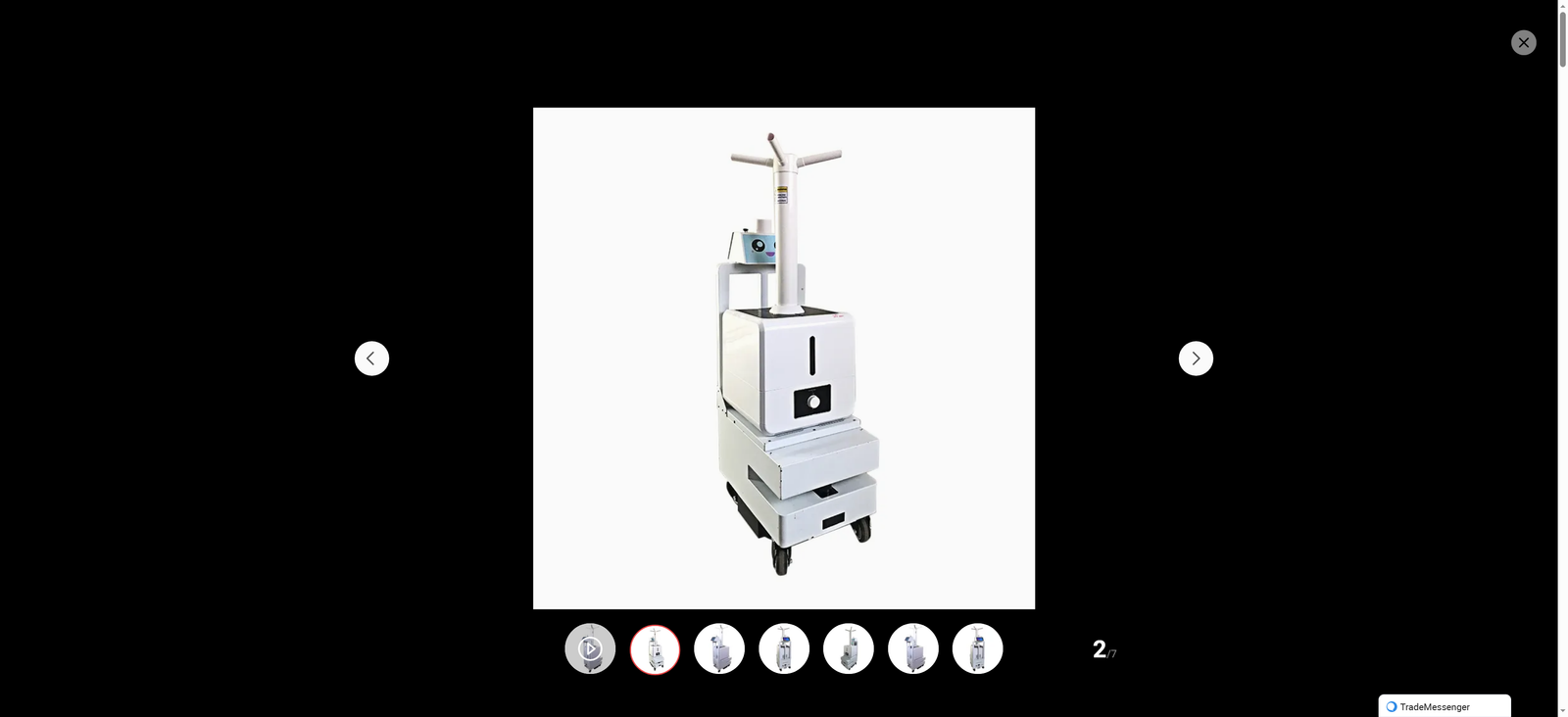
In an era where public health safety has become a top priority, the demand for efficient, reliable, and intelligent disinfection solutions is soaring. The intelligent sterilization disinfection robot emerges as a game-changer, integrating cutting-edge technologies to address the limitations of traditional manual disinfection. With its dual modes of atomization and automatic spraying, flexible mobile design, and thorough disinfection capability, this innovative device is revolutionizing hygiene management across various sectors.
Dual Modes: Atomization & Automatic Spraying for Versatile Disinfection
The core advantage of the intelligent sterilization disinfection robot lies in its dual disinfection modes, which complement each other to cover diverse scenarios and needs. Atomization disinfection, a precision-driven technology, converts liquid disinfectants into tiny particles (usually less than 5 μm) through ultrasonic or compressed air technology . These microscopic particles can suspend in the air for an extended period, penetrating every corner of a space—including hard-to-reach areas such as gaps between furniture, air ducts, and narrow corridors—that traditional disinfection methods often miss. This mode is particularly effective for air disinfection and surface sterilization in enclosed environments, as the particles fully contact and neutralize pathogens like bacteria, viruses, and fungi by disrupting their cellular structures .
Complementing the atomization mode is automatic spraying, which delivers targeted and uniform disinfection on large surface areas. Equipped with high-precision nozzles, the robot sprays disinfectant evenly across floors, walls, and equipment surfaces, ensuring consistent coverage without over-spraying or leakage . This mode excels in high-traffic public areas where rapid surface disinfection is required, such as hospitals, airports, and shopping malls. What sets the dual-mode system apart is its adaptability: users can switch between modes based on specific needs—using atomization for air and fine-particle disinfection, and automatic spraying for large-area surface treatment—or run both simultaneously for comprehensive hygiene protection .
Mobile Design: Unrestricted Movement for Full-Coverage Disinfection
The robot’s mobile design is a key enabler of its thorough disinfection capability, eliminating the constraints of fixed disinfection equipment. Powered by advanced navigation technologies such as laser SLAM (Simultaneous Localization and Mapping) and visual SLAM, the robot can autonomously map its environment, plan optimal disinfection routes, and adjust its path in real-time to avoid obstacles . With 360-degree omnidirectional obstacle avoidance sensors, it can safely navigate complex spaces—whether navigating around medical equipment in hospitals, school desks, or office partitions—without human intervention .
This mobility allows the robot to cover large areas efficiently: some models can complete disinfection of a 1000 m³ space in just 15 minutes and handle mapping of up to 40,000 square meters, making them suitable for both small rooms and large-scale facilities like stadiums and logistics warehouses . Additionally, the robot features autonomous recharging functionality—when its battery level drops below a preset threshold, it automatically returns to its charging station, ensuring 24/7 uninterrupted operation . For multi-area disinfection tasks, users can pre-program multiple waypoints, and the robot will move between locations seamlessly, delivering consistent disinfection across the entire premises .
Thorough Disinfection: Beyond Surface-Level Hygiene
Thoroughness is the ultimate goal of the intelligent sterilization disinfection robot, achieved through the synergy of dual modes, mobile design, and intelligent control. Unlike manual disinfection, which is prone to human error, fatigue, and inconsistent standards, the robot executes disinfection tasks with precision every time. It can calculate the required disinfection time and disinfectant dosage based on the space area, ensuring that the disinfection effect meets international standards—killing up to 99.99% of pathogens . In healthcare settings, this level of thoroughness is critical for reducing hospital-acquired infections (HAIs): a German hospital reported a 42% reduction in HAIs after deploying such robots .
Safety is also integrated into the robot’s design to ensure thorough disinfection without endangering human health. Equipped with PIR motion sensors, the robot can detect human presence in real-time and immediately halt disinfection operations (especially for UV-C and atomization modes) to prevent exposure to disinfectants or harmful radiation . Once the area is clear, it resumes operation automatically, balancing thoroughness with safety. Furthermore, the robot supports remote control and data monitoring—users can manage disinfection tasks via a mobile app, view real-time operation data, and generate disinfection logs for traceability, ensuring compliance with hygiene regulations .
Market Impact and Future Prospects
The intelligent sterilization disinfection robot is driving a transformation in hygiene management, with its applications expanding across healthcare, education, commercial, and industrial sectors. In healthcare, it has become a staple in hospitals, clinics, and nursing homes, where it disinfects operating rooms, isolation wards, and ICU units to protect patients and medical staff . In education, schools use it to sanitize classrooms, libraries, and cafeterias, creating a safe environment for students . Public transportation hubs, office buildings, and food processing facilities also benefit from its efficient and consistent disinfection capabilities .
The global market for intelligent disinfection robots is growing at a rapid pace, with a projected compound annual growth rate (CAGR) of 14.7% from 2023 to 2028, reaching $82 billion by 2028 . This growth is fueled by increasing public health awareness, stringent hygiene regulations, and technological advancements in robotics and AI . Future iterations of the robot are expected to integrate more advanced features, such as multi-functional modules for air purification and temperature monitoring, as well as enhanced AI algorithms for predictive disinfection based on traffic patterns .
In conclusion, the intelligent sterilization disinfection robot, with its dual atomization and automatic spraying modes, flexible mobile design, and thorough disinfection capability, is no longer a luxury but a necessity in modern hygiene management. It not only improves disinfection efficiency and effectiveness but also reduces reliance on manual labor and minimizes health risks for workers. As technology continues to evolve, this innovative device will play an increasingly vital role in safeguarding public health, building smarter and safer environments for communities worldwide.