
AI-Powered Humanoid Commercial Delivery Robots: Reshaping the Future of Logistics and Beyond
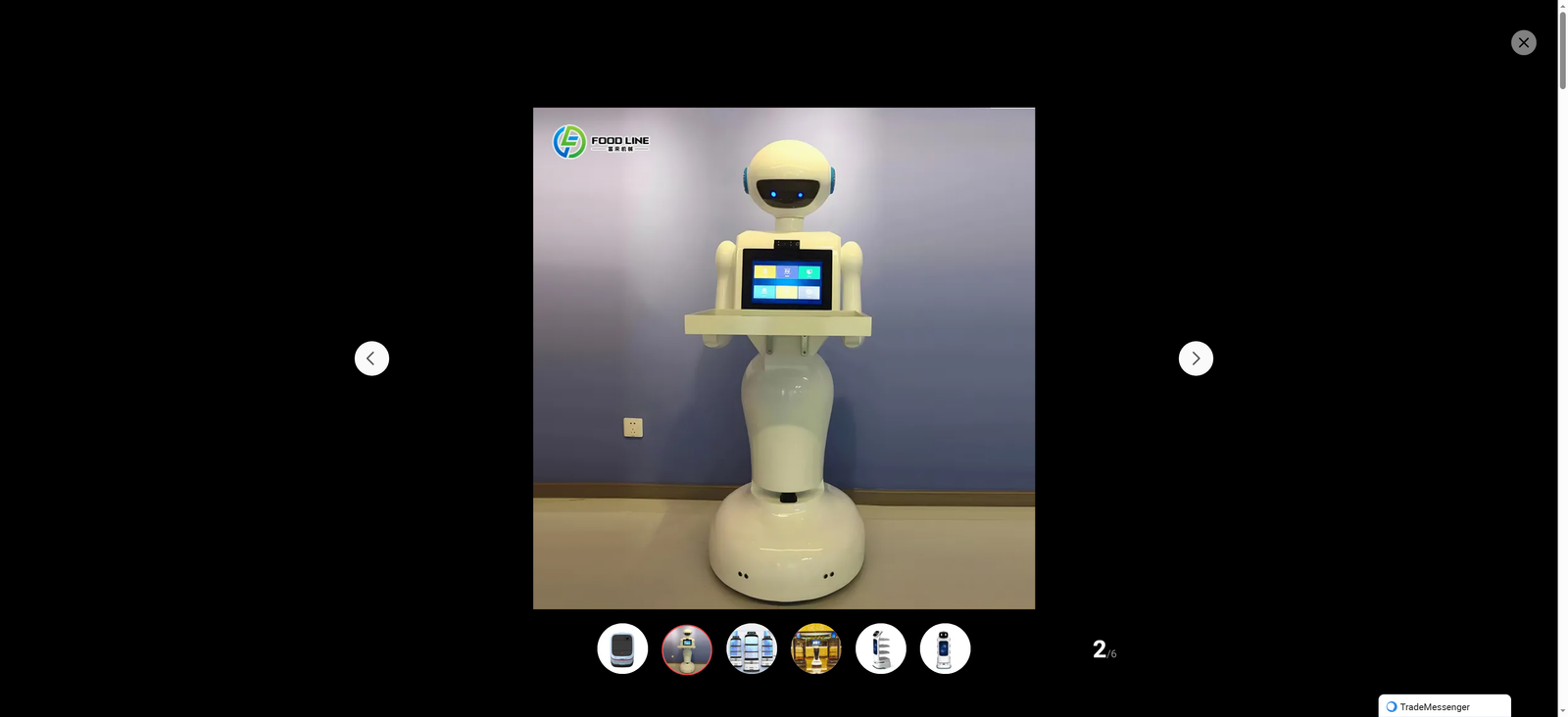
In the era of intelligent industrial upgrading, the integration of artificial intelligence and robotics has become a core driving force for transforming commercial operations. Among them, artificial intelligent commercial delivery robots, especially humanoid AI delivery robots, are breaking through the limitations of traditional automation solutions. With their human-like mobility, adaptive intelligence, and seamless integration capabilities, they are redefining efficiency boundaries in logistics, warehousing, retail, and other sectors, becoming a key infrastructure for businesses to achieve cost reduction, efficiency improvement, and sustainable development.
From Concept to Commercialization: The Rise of Humanoid AI Delivery Robots
The global logistics and commercial service industries have long been plagued by pain points such as labor shortages, high turnover rates, and rising labor costs. According to industry data, the vacancy rate in the global logistics sector exceeds 8%, and in emerging markets such as Latin America, it reaches more than 10% <superscript:2superscript:3. Traditional automated equipment such as AMRs and conveyor belts are constrained by fixed paths and facility renovation requirements, making it difficult to adapt to complex and diverse commercial scenarios. Against this backdrop, humanoid AI delivery robots have emerged as a game-changer, transitioning from laboratory demonstrations to large-scale commercial deployment.
A landmark case is the cooperation between Latin American e-commerce giant Mercado Libre and Agility Robotics, which deployed Digit humanoid robots in its Texas fulfillment center <superscript:2superscript:3. These robots have completed commercial verification of moving over 100,000 containers, seamlessly integrating into existing workflows without modifying warehouse facilities. This cooperation marks that humanoid delivery robots have officially stepped out of the "concept stage" and become a mature solution to solve labor shortages, verifying their practical value in real business environments.
Core Advantages: Why Humanoid AI Delivery Robots Outperform Traditional Solutions
Compared with traditional delivery robots and automated equipment, humanoid AI delivery robots have unique competitive advantages driven by advanced AI technology and bionic design, creating irreplaceable value for commercial users.
Human-Scale Flexibility: Adaptive to Human-Built Environments
Designed with human-like dimensions (e.g., Digit stands at approximately 1.75 meters tall), humanoid AI delivery robots can move freely in spaces built for humans, such as standard warehouse aisles, restaurant corridors, and retail stores <superscript:3. Unlike AMRs that require pre-set paths or conveyor belts that need fixed layouts, they can navigate narrow passages, turn flexibly, and even climb small steps, eliminating the need for large-scale facility renovation. This "plug-and-play" capability shortens the deployment cycle from 3-6 months (for traditional automation) to less than a week, reducing landing costs by over 80% <superscript:2.
2. AI-Driven Intelligent Perception and Decision-Making
Equipped with multi-sensor fusion systems (including lidar, depth cameras, IMUs, and visual sensors) and advanced AI algorithms, humanoid delivery robots achieve precise perception and intelligent decision-making in complex dynamic environments <superscript:4. They can perform centimeter-level positioning, predict pedestrian movement trajectories for proactive obstacle avoidance, and adapt to sudden changes such as temporary obstacles or crowd surges. The integration of large language models (LLMs) further enhances their interactive capabilities—they can respond to natural language inquiries, sync task status in real time, and even collaborate with human staff through voice prompts, realizing seamless human-robot collaboration.
3. Systematic Integration: Synergizing with Existing Infrastructure
Top-tier humanoid AI delivery robots are equipped with cloud-based management platforms (such as Agility Arc), enabling seamless integration with existing warehouse management systems (WMS), automated mobile robots (AMRs), and conveyor belt systems <superscript:2superscript:3. This means they do not work in isolation but form a "humanoid robot mobile robot fixed automation" integrated solution. For example, after AMRs transport materials to a designated area, humanoid robots can take over precise handling to shelves or sorting stations, creating an uninterrupted logistics chain that improves overall efficiency by more than 30% compared to single-equipment operations <superscript:2.
4. Cost-Effective Long-Term Operation
With modular design and mature supply chains, humanoid AI delivery robots have achieved significant cost reductions in hardware and maintenance. Their mean time between failures (MTBF) exceeds 8,000 hours, and maintenance only requires simple module replacement, reducing long-term operating costs by over 50% compared to traditional automation equipment<superscript:2. For commercial users, this translates to shorter investment return cycles—usually 12-18 months—and stable cost control in high-volume, high-frequency delivery scenarios.
Widely Deployed: Unlocking Value Across Multiple Commercial Scenarios
The versatility of humanoid AI delivery robots allows them to penetrate diverse commercial scenarios, creating tangible value for businesses in different sectors.
Logistics and Warehousing: Solving Labor Shortages at the Core
In e-commerce fulfillment centers and logistics warehouses, humanoid robots take on high-repetition, high-physical-load tasks such as container handling, material transfer, and shelf replenishment <superscript:2superscript:3. They not only fill labor gaps in hard-to-recruit positions but also improve ergonomic safety by reducing physical injuries to employees. Mercado Libre plans to expand the deployment of Digit robots from the U.S. to Latin American warehouses, aiming to build the most advanced flexible logistics network in the region <superscript:3.
Retail and Catering: Enhancing Service Efficiency and Experience
In large retail stores and catering venues, humanoid AI delivery robots can handle tasks such as product replenishment, order delivery, and table service. Unlike traditional catering robots with single functions, humanoid models can adapt to complex restaurant layouts, avoid diners proactively, and even interact with customers to introduce dishes or promotions through LLM-driven intelligent interaction <superscript:4. They can deliver 400-600 orders per day, doubling the efficiency of human staff, and effectively alleviating the "three highs and one low" (high rent, high labor costs, high ingredient costs, low profit margins) dilemma in the catering industry <superscript:4.
Urban Last-Mile Delivery: Complementing Intelligent City Construction
With the acceleration of L4-level autonomous driving technology and the gradual opening of road rights in over 250 cities worldwide, humanoid AI delivery robots are also exploring urban last-mile delivery scenarios<superscript:1. Equipped with adaptive navigation and safety protection systems, they can deliver parcels, daily necessities, and meals to communities and office buildings, complementing logistics vehicles and improving the efficiency of urban distribution networks. Leading enterprises such as JD Logistics and SF Express are actively deploying intelligent delivery solutions, with plans to purchase 1 million units of intelligent delivery equipment to build a full-scenario delivery ecosystem <superscript:1.
The Future Outlook: Accelerated Iteration Driven by Policy and Technology
The commercialization of humanoid AI delivery robots is facing unprecedented development opportunities. Policy-wise, governments around the world are intensifying support—China’s Ministry of Transport and State Post Bureau have issued policies to promote large-scale application of intelligent delivery equipment, while cities such as Beijing, Shenzhen, and Guangzhou have clarified testing procedures and liability insurance requirements <superscript:1. Technologically, with the iteration of AI algorithms, sensor cost reduction, and the maturity of the industrial chain, humanoid robots will achieve better performance in load capacity, battery life, and interaction capabilities <superscript:1superscript:2.
It is expected that in 2026, driven by factors such as model iteration, policy liberalization, and the listing of leading enterprises, the global humanoid commercial delivery robot market will usher in a large-scale replacement wave <superscript:1. For businesses, deploying humanoid AI delivery robots is no longer a "forward-looking investment" but a strategic choice to gain a competitive edge in the intelligent era.
As a disruptive force in the commercial delivery field, humanoid AI delivery robots are redefining the relationship between technology and business operations. With continuous technological innovation and scenario expansion, they will become an indispensable core asset for businesses to achieve digital transformation, leading the logistics and commercial service industries into a new era of efficiency, intelligence, and sustainability.