
AI Traffic Line Painting Robot: Self-Driving Technology Empowers Precise Road Marking
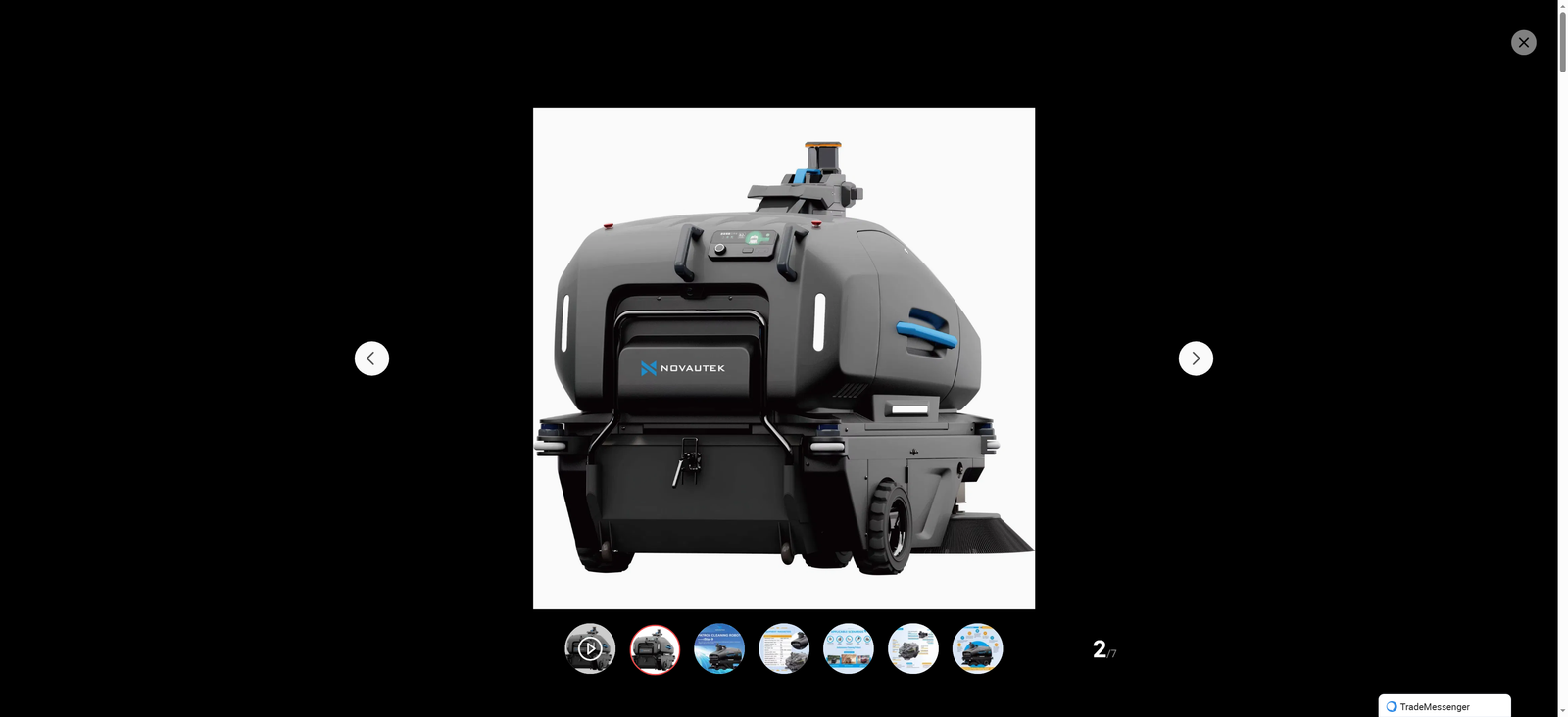
In the era of intelligent transportation, road traffic markings serve as the "visual language" guiding vehicle travel and ensuring traffic order, whose accuracy and durability are directly related to road safety and traffic efficiency. Traditional road marking relies heavily on manual operation, which is plagued by low efficiency, unstable quality, high safety risks and serious material waste. With the integration of AI, self-driving and precision control technologies, the AI traffic line painting robot has emerged as a revolutionary solution, redefining the pattern of road marking construction and realizing the leap from "manual operation" to "intelligent precision marking".
The core competitiveness of the AI traffic line painting robot lies in the deep integration of self-driving technology and AI intelligent control, which breaks through the limitations of manual operation and achieves high-precision, full-automatic marking operations. Different from the semi-automatic equipment that requires manual driving and guidance, the robot is equipped with a high-performance navigation and positioning system, including laser radar, GPS positioning system and inertial measurement unit (IMU), which can accurately capture the road environment and its own position information in real time. Through AI algorithms, it can automatically analyze road conditions, identify obstacles such as manholes and road cracks, and dynamically adjust the driving path and marking parameters to ensure that the marking is consistent with the design requirements without deviation.
The self-driving system of the AI traffic line painting robot adopts a multi-sensor fusion strategy to achieve centimeter-level positioning accuracy, which is the key to precise marking. The laser radar is responsible for scanning the road surface in 360 degrees, collecting detailed road topographic data, and identifying small obstacles that are difficult to be found by the naked eye; the GPS positioning system realizes wide-range precise positioning, ensuring that the robot can accurately reach the designated construction area; the IMU inertial measurement unit can compensate for the positioning error caused by complex road conditions such as slopes and potholes, maintaining the stability of the robot's driving and marking posture. In addition, the robot can import CAD design drawings directly through the intelligent terminal, and automatically complete map interpretation, path planning and task assignment, realizing "one-key operation" from design to construction. Operators only need to set the marking parameters (width, thickness, spacing) through the Android tablet or remote control, and the robot can independently complete the marking of straight lines, curves, arrows, characters and special patterns such as no-parking grids and tidal lanes, adapting to various road scenarios including highways, municipal roads, parking lots and sports fields.
AI intelligent algorithm is the "brain" of the robot, which provides strong support for precise marking and efficient operation. The robot's control system uses machine learning algorithms to continuously learn and optimize based on a large number of road marking data, gradually improving the adaptability to complex road environments. For example, in the process of marking, if the road surface is uneven or the material viscosity changes, the AI algorithm can automatically adjust the spraying pressure and walking speed of the nozzle to ensure the uniformity and thickness of the marking coating, avoiding the problems of uneven width, blurring and peeling caused by manual operation. At the same time, the AI system can intelligently control the dosage of coating, calculate the optimal dosage according to the road surface condition and marking requirements, greatly reducing material waste compared with traditional manual construction. Some advanced robots can even realize real-time quality inspection of marking through visual recognition technology, and automatically repair the unqualified parts, ensuring the construction quality of each section of marking.
In practical application scenarios, the AI traffic line painting robot has shown remarkable advantages in efficiency, precision and safety, and has been gradually promoted and applied in various regions. In the construction of Shitai Expressway in Hebei, China, the independently developed pre-marking robot successfully completed the marking tasks of lane arrow indicators and emergency parking belts, with its marking precision and operation fluency highly recognized by on-site construction personnel. Compared with traditional manual marking, the robot's efficiency is increased by more than 3 times, and one person and one machine can continuously complete dozens of kilometers of marking operations every day, which significantly shortens the traffic control time caused by road maintenance and reduces the impact on public travel. In downtown Cleveland, USA, the road-painting robot named Stella has been put into use to repaint crosswalks, which traditionally requires a team of three workers, but now only one operator is needed to complete the task, greatly saving manpower costs and ensuring the safety of construction personnel by keeping them away from busy road surfaces.
In terms of performance indicators, the AI traffic line painting robot has reached an advanced level in the industry. The marking precision can be controlled within 1-2 cm, the maximum walking speed can reach 12 km/h, and the battery life can reach 40 kilometers or 10 hours of continuous operation, which can meet the needs of large-area continuous construction. Its compact structure, 20-degree climbing capacity and in-situ steering function enable it to adapt to complex construction environments such as rough road surfaces and narrow areas, and it can even complete marking operations on grasslands and gravel roads. In addition, the robot is equipped with a solar power supply system in some models, which can charge the storage battery in real time, further improving the endurance and environmental protection performance.
With the continuous development of intelligent transportation and smart city construction, the demand for high-precision, efficient and safe road marking is increasing day by day, and the AI traffic line painting robot, as an important part of intelligent road construction, has broad development prospects. In the future, with the continuous optimization of AI algorithms and self-driving technology, the robot will realize more intelligent functions: it can realize seamless connection with intelligent transportation systems, obtain road maintenance information in real time, and carry out active maintenance marking; it can realize group operation of multiple robots, cooperate with each other to complete large-scale road marking tasks, and further improve construction efficiency; it can also integrate more environmental protection materials and technologies to reduce the impact of marking construction on the environment.
In conclusion, the AI traffic line painting robot has subverted the traditional road marking mode with self-driving technology as the support and AI intelligent control as the core, realizing the organic unity of precision, efficiency, safety and environmental protection. It not only solves the pain points of traditional manual marking, but also provides strong technical support for the construction of intelligent transportation and smart cities. With the continuous innovation and promotion of technology, the AI traffic line painting robot will surely play a more important role in the field of road construction, painting a safer and more efficient "visual guide" for the development of intelligent transportation, and contributing more scientific and technological strength to the construction of traffic infrastructure.