
Advanced Intelligent Food Delivery Waiter Service Robot: Reshaping the New Ecology of Hotel and Restaurant Services
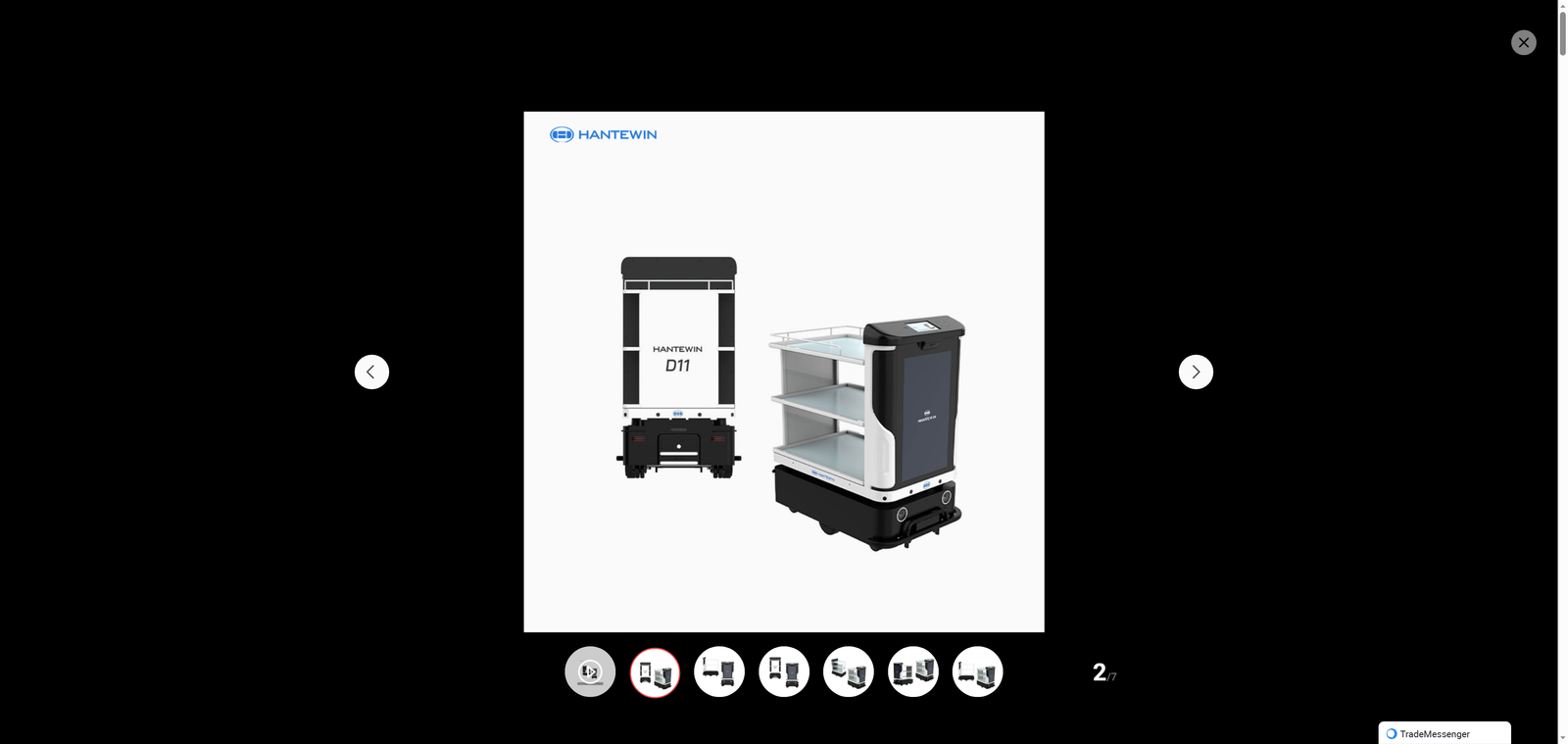
With the rapid development of artificial intelligence, Internet of Things and automation technology, the hotel and catering industry, as a traditional service field, is ushering in a profound transformation driven by intelligence. Among them, the advanced intelligent food delivery waiter service robot (hereinafter referred to as "intelligent food delivery robot") has gradually become a core solution to solve the pain points of the industry, integrating functions such as automatic food delivery, intelligent path planning, human-computer interaction and efficient collaboration. It is not only a "new employee" in hotels and restaurants, but also a key force to promote the upgrading of service quality, optimize operational efficiency and create differentiated competitiveness. This article will deeply explore the technical characteristics, application value and development trend of intelligent food delivery robots in hotel and catering solutions.
Technical Empowerment: The Core Advantages of Advanced Intelligent Food Delivery Robots
Different from the early simple food delivery equipment, the advanced intelligent food delivery robot relies on cutting-edge technology to realize a leap from "functionalization" to "intelligentization", and its core advantages are mainly reflected in three aspects.
First of all, precision path planning and obstacle avoidance capabilities lay the foundation for stable operation. Equipped with multi-sensor fusion systems such as lidar, visual cameras and ultrasonic sensors, the robot can comprehensively perceive the complex environment of hotels and restaurants, including crowded dining areas, moving guests, sudden obstacles and narrow passages. Based on SLAM (Simultaneous Localization and Mapping) technology, it can quickly build a real-time map of the venue, plan the optimal food delivery path in seconds, and flexibly adjust the route when encountering obstacles, avoiding collisions while ensuring the efficiency of food delivery. Whether it is a large hotel banquet hall with a large flow of people or a small restaurant with a complex layout, the robot can move freely and complete the delivery task accurately.
Secondly, intelligent human-computer interaction and scenario adaptation capabilities enhance the service experience. The advanced intelligent food delivery robot is equipped with a high-definition touch screen, voice recognition module and intelligent voice assistant, which can realize multi-modal interaction with guests and waiters. Guests can call the robot through voice commands to ask for water, napkins and other services; waiters can send delivery tasks to the robot through the background system, set priority orders, and query the real-time location and task progress of the robot. At the same time, the robot has strong scenario adaptation capabilities. It can automatically adjust the moving speed according to the flow of people in the venue - slow down and remind in crowded areas, and speed up in unobstructed areas to improve efficiency; it can also recognize the dining table number accurately, automatically stop at the designated position, and send a gentle voice reminder to let guests take meals, which is intimate and thoughtful.
Finally, efficient collaborative operation and data management capabilities optimize the operational efficiency of the venue. Multiple intelligent food delivery robots can form a collaborative team, and through the background management system, they can realize task allocation, load balancing and mutual scheduling. For example, when a restaurant is in the peak dining period, the system can automatically assign delivery tasks to each robot according to the distance of the dining table and the number of dishes, avoiding the situation of idle robots and task backlogs. In addition, the robot can record and upload operational data in real time, including the number of deliveries per day, average delivery time, frequency of use of each dining area, etc. Hotel and restaurant managers can use these data to analyze the peak hours of business, optimize the layout of the dining area, adjust the staffing plan, and realize data-driven refined operation.
Scenario Application: Solving the Pain Points of Hotel and Catering Services
In hotel and catering scenarios, intelligent food delivery robots have shown strong practical value, effectively solving the industry's pain points such as labor shortage, high labor costs, uneven service quality and low operational efficiency, and bringing a win-win situation for venues, waiters and guests.
For hotels and restaurants, cost control and efficiency improvement are the most direct benefits. In recent years, the labor cost of the catering industry has been rising continuously, and the problem of "difficulty in recruiting and retaining employees" has become increasingly prominent. The introduction of intelligent food delivery robots can replace waiters to complete a large number of repetitive and labor-intensive work such as food delivery, dish collection and tableware delivery, reducing the demand for front-line service personnel by 30%-50%. At the same time, the robot can work 24 hours a day without rest, vacation or salary increase, which greatly reduces the long-term labor cost of the venue. Taking a medium-sized hotel restaurant as an example, after introducing 3-5 intelligent food delivery robots, the average delivery time per order can be shortened from 8-10 minutes to 3-5 minutes, the table turnover rate can be increased by 20% - 30%, and the operational efficiency has been significantly improved.
For waiters, the robot has become a "powerful assistant" to reduce work pressure and improve service quality. In the past, waiters often had to run back and forth between the kitchen and the dining area, undertaking a lot of physical work, and it was easy to be busy and make mistakes during peak hours. With the help of intelligent food delivery robots, waiters can be freed from tedious food delivery work, and focus on providing high-value services such as guest reception, order recommendation, and dining experience follow-up. This not only reduces the physical burden of waiters, but also allows them to have more time to communicate with guests, understand guest needs, and improve the satisfaction and loyalty of guests.
For guests, the intelligent food delivery robot brings a novel, efficient and hygienic dining experience. In the post-epidemic era, guests pay more attention to the hygiene and safety of dining. The intelligent food delivery robot adopts closed food delivery boxes, which can avoid manual contact in the process of food delivery, reduce the risk of cross-infection, and ensure food hygiene. At the same time, the robot's accurate delivery and intimate reminder avoid the situation of wrong delivery and missed delivery, and improve the efficiency of dining. In addition, the novel appearance and intelligent interaction of the robot also add a sense of technology and fun to the dining process, especially for young guests and family guests, it has become a "net red check-in point" in the venue, enhancing the memory point of the dining experience.
Future Trend: The Deep Integration of Intelligent Food Delivery Robots and Hotel Catering Industry
With the continuous progress of technology and the deepening of industry demand, intelligent food delivery robots will not only stay in the field of food delivery, but will move towards a more intelligent, integrated and personalized direction, and realize deep integration with the hotel and catering industry.
On the one hand, the technical iteration will be accelerated, and the function will be more comprehensive. In the future, intelligent food delivery robots will integrate more advanced technologies such as artificial intelligence large models, 5G and edge computing. Through the large model, the robot can understand more complex voice commands, realize emotional interaction with guests, and even provide services such as dish introduction and scenic spot recommendation according to the guest's preferences; relying on 5G technology, the robot can realize low-latency data transmission and remote control, ensuring stable operation in large-scale venues; with the help of edge computing, the robot can process environmental data locally, improving the speed of path planning and obstacle avoidance.
On the other hand, the scenario application will be expanded, and the integration will be deeper. Intelligent food delivery robots will no longer be limited to the dining area, but will extend to the entire hotel and catering chain, including hotel lobbies, guest rooms, banquet halls, and even back kitchens. For example, in hotel guest rooms, robots can provide 24-hour room service such as meal delivery, laundry delivery and express delivery; in the back kitchen, robots can cooperate with kitchen automation equipment to complete the transfer of ingredients and finished dishes, realizing the automation of the entire process from kitchen to dining table. At the same time, the robot will be connected with the hotel's PMS system, catering POS system and membership system to realize data interconnection, so that the service can be more personalized. For example, when a member guest checks in, the robot can automatically recognize the guest's identity and deliver preferred drinks and snacks according to the guest's consumption habits.
In addition, the industry standard will be improved, and the development will be more standardized. With the popularization of intelligent food delivery robots in the hotel and catering industry, relevant national and industry standards will be gradually improved, covering the technical parameters, safety performance, service norms and after-sales guarantee of robots. This will not only standardize the market order, avoid low-level homogenized competition, but also promote the healthy and sustainable development of the industry, making intelligent food delivery robots truly become a standard configuration in the hotel and catering industry.
Conclusion
The advanced intelligent food delivery waiter service robot, as a product of the integration of technology and service, is reshaping the service mode and operational ecology of the hotel and catering industry with its unique technical advantages and practical value. It not only solves the long-term pain points of the industry, but also brings a new experience for venues, waiters and guests, and injects strong momentum into the high-quality development of the hotel and catering industry.
In the future, with the continuous innovation of technology and the continuous expansion of application scenarios, intelligent food delivery robots will play a more important role in the hotel and catering industry, moving from "assisting service" to "leading service", and helping the hotel and catering industry to enter a new era of intelligence, efficiency and high quality. For hotel and restaurant operators, seizing the opportunity of intelligent transformation and actively introducing intelligent food delivery robot solutions will become an important choice to enhance core competitiveness and achieve long-term development.