
Advanced Autonomous Navigation Contactless Food Delivery Service Robot: Reshaping the Service Ecology of Hotels and Restaurants
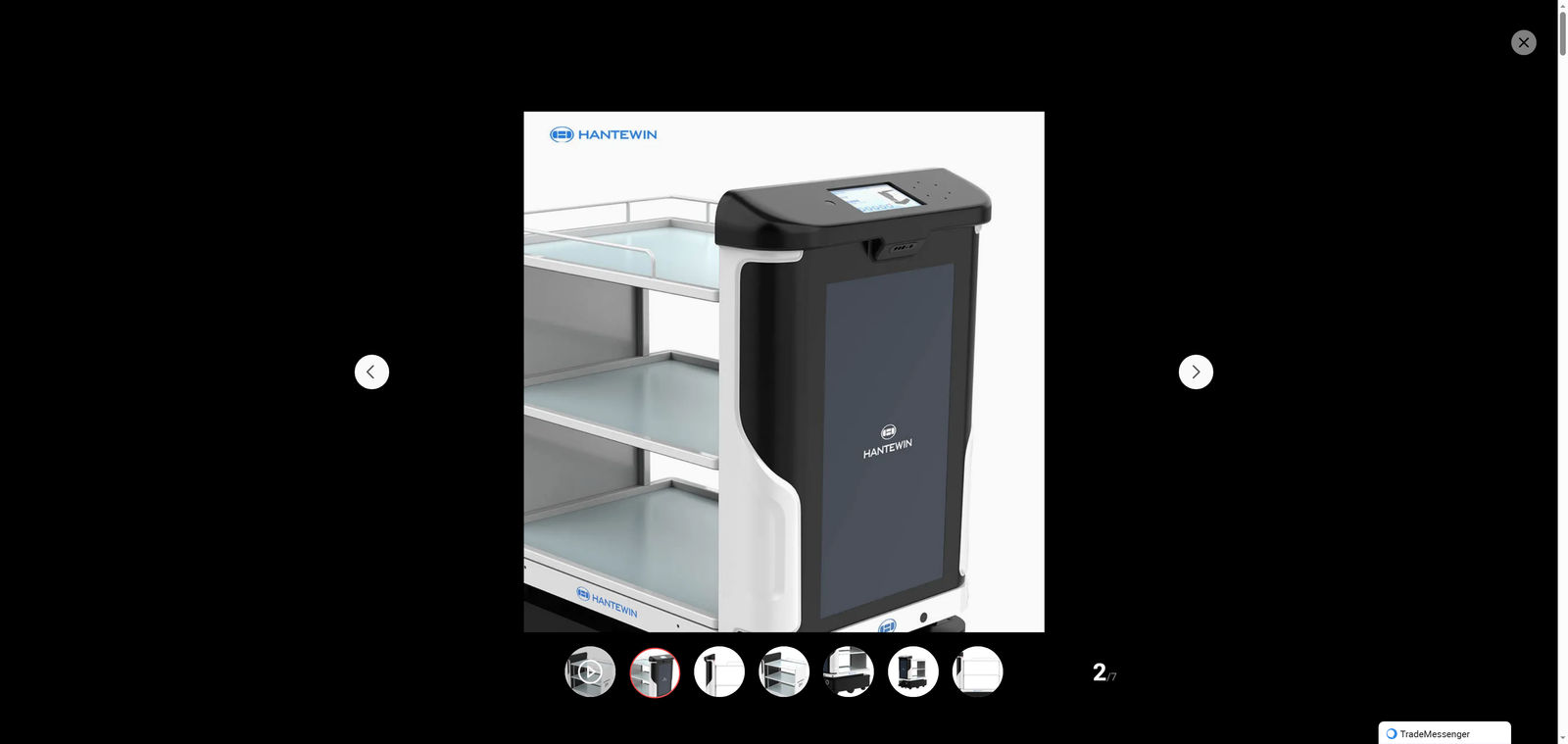
In the wave of digital transformation and intelligent upgrading, the hotel and catering industry is undergoing a profound revolution. Driven by the dual demands of improving service efficiency and ensuring health and safety, the Advanced Autonomous Navigation Contactless Food Delivery Service Robot has emerged as a key intelligent device, breaking through the limitations of traditional manual service and building a new pattern of efficient, hygienic and high-quality service. With its cutting-edge autonomous navigation technology and contactless service mode, this type of robot is gradually becoming an indispensable core force in the daily operation of hotels and restaurants, injecting strong momentum into the high-quality development of the industry.
The core competitiveness of the contactless food delivery robot lies in its advanced autonomous navigation system, which is the "brain" and "eyes" of the robot to complete complex delivery tasks. Different from the early simple path planning, the current generation of robots adopts a multi-sensor fusion technology, integrating laser radar, visual cameras, ultrasonic sensors and other equipment to achieve 360-degree all-round environmental perception. Laser radar provides high-precision distance measurement data, ensuring that the robot can accurately locate its position in a complex space; visual cameras recognize obstacles, pedestrians and traffic signs in real time, and combine with ultrasonic sensors to avoid blind spots, so as to flexibly respond to dynamic changes in the environment. Whether it is a narrow corridor of a hotel, a crowded restaurant hall, or a space with sudden obstacles such as cleaning tools and moving chairs, the robot can quickly adjust its path, maintain a stable speed, and ensure that the food is delivered to the target location safely and on time without manual intervention.
The contactless service mode supported by autonomous navigation has become a major highlight of the robot, especially in the post-epidemic era, which meets the public's demand for healthy and hygienic services. In traditional hotel and catering services, food delivery by waiters involves multiple links such as order taking, food picking, and handover, which not only increases the risk of cross-infection, but also may lead to food pollution due to human factors. The contactless food delivery robot realizes the whole process of "machine picking - automatic delivery - intelligent sign-off", which completely reduces human contact. Guests can place orders through mobile phones or self-service terminals. After the kitchen completes the meal preparation, the robot receives the order information and automatically goes to the designated window to pick up the meal. It then navigates to the guest's table or hotel room door, and reminds the guest to take the meal through voice broadcast and screen prompts. Guests only need to take the meal by themselves, and the robot will automatically return to the charging station or wait for the next task after completing the delivery. This mode not only effectively reduces the risk of virus transmission, but also ensures the hygiene and safety of food, and at the same time meets the personalized needs of guests for private service, enhancing the overall service experience.
In addition to core functions such as autonomous navigation and contactless delivery, the food delivery robot is also highly adaptable to the scenario characteristics of hotels and restaurants, and can be deeply integrated into the daily operation process to solve a series of pain points of the industry. For hotels, the robot can not only deliver three meals a day, snacks and drinks to guests' rooms, but also undertake tasks such as delivering toiletries, laundry and documents, which greatly reduces the workload of housekeeping and service staff, especially during peak hours such as morning and evening meals, which can effectively alleviate the shortage of human resources. For restaurants, the robot can realize efficient meal delivery in large spaces, multi-floor and multi-table scenarios. It can accurately remember the table number information, avoid wrong delivery and missing delivery, and at the same time reduce the time guests wait for meals, improve the turnover rate of tables. In addition, the robot is also equipped with intelligent interaction functions. It can answer common questions of guests, such as hotel check-out time, restaurant dish introduction, etc., through voice interaction, and even play promotional information and background music, which enriches the service form and enhances the brand image of hotels and restaurants.
The popularization and application of advanced autonomous navigation contactless food delivery robots not only brings practical benefits to hotels and restaurants, but also promotes the transformation and upgrading of the entire industry. From the perspective of operation cost, although the initial investment of the robot is relatively high, in the long run, it can save a lot of labor costs, management costs and training costs for the merchants. Compared with manual service, the robot can work 24 hours a day without rest, vacation or error due to fatigue, which greatly improves the service efficiency and stability. From the perspective of industry development, the application of robots promotes the digital transformation of hotels and restaurants. Through the connection with the merchant's management system, the robot can realize data statistics and analysis, such as recording the number of deliveries, peak delivery periods, and favorite dishes of guests, providing data support for the merchant's operation decision-making. At the same time, the intelligent service mode has become a new selling point for hotels and restaurants to attract customers, helping merchants to gain an advantage in the fierce market competition.
Of course, the development of contactless food delivery robots is still in a stage of continuous progress and improvement. At present, some robots still face certain challenges in complex scenarios such as extreme weather, ultra-narrow spaces, and complex human-computer interaction. However, with the continuous breakthrough of technologies such as artificial intelligence, sensor technology, and battery technology, the performance of robots will be further optimized, and the application scenarios will be more extensive. In the future, the food delivery robot will not only be limited to the delivery function, but will also realize more intelligent functions such as intelligent order taking, food heating, and waste recycling, becoming a comprehensive intelligent service terminal in hotels and restaurants.
In conclusion, the Advanced Autonomous Navigation Contactless Food Delivery Service Robot is an important product of the integration of intelligent technology and the hotel and catering industry. It has brought revolutionary changes to the industry with its advantages of high efficiency, hygiene, intelligence and low cost. As the pace of intelligent upgrading accelerates, this type of robot will be more widely used in hotels and restaurants, reshaping the service ecology of the industry, and bringing a better service experience to guests and more development opportunities to merchants. It is believed that in the near future, intelligent food delivery robots will become a common scene in hotels and restaurants, and contribute more to the high-quality development of the service industry.