
Advanced AI Delivery Robots: Transforming Service Experience in Hotels and Restaurants
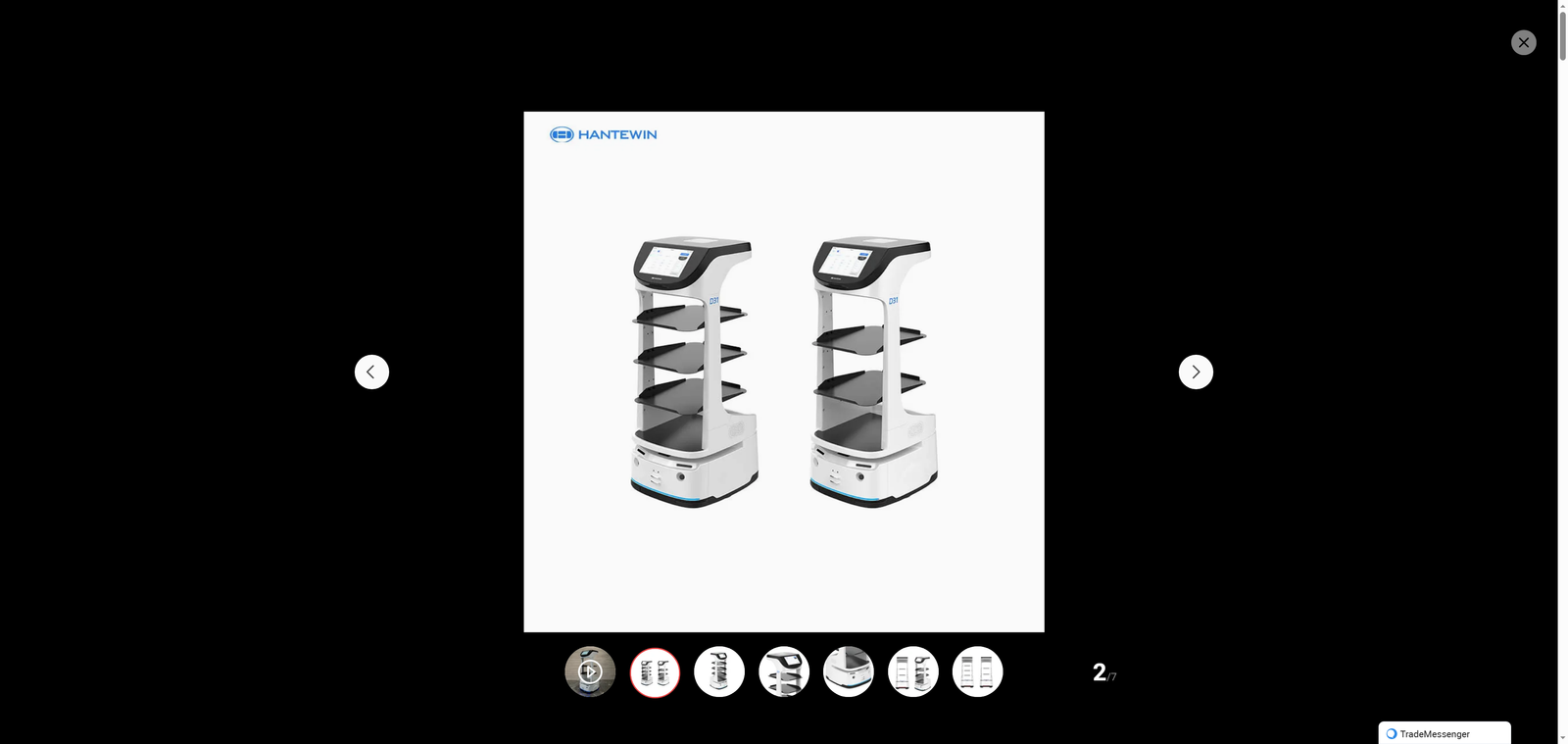
In the era of digital transformation, the service industry is undergoing a profound revolution driven by artificial intelligence (AI) technology. Among the emerging smart devices, advanced AI delivery robots have gradually become a new benchmark for upgrading services in hotels and restaurants. These intelligent robots, equipped with cutting-edge AI algorithms, sensor technology and autonomous navigation systems, are no longer just "novelty tools" but reliable partners that optimize operational efficiency, enhance customer experience and reshape service models. From delivering meals and drinks in restaurants to transporting luggage and amenities in hotels, AI delivery robots are quietly changing the way people perceive and experience catering and hospitality services.
The core competitiveness of advanced AI delivery robots lies in their powerful intelligent capabilities, which enable them to adapt to the complex and dynamic environments of hotels and restaurants with high flexibility and stability. Unlike traditional delivery equipment that relies on fixed routes, AI delivery robots are equipped with multi-sensor fusion systems, including lidar, visual cameras and ultrasonic sensors. These sensors work together to collect real-time environmental data, allowing the robots to accurately identify obstacles such as pedestrians, tables and chairs, and dynamically adjust their travel routes. For example, in a crowded restaurant during peak hours, the robot can quickly detect the flow of people, choose the optimal path to avoid congestion, and deliver meals to the target table efficiently without manual intervention. In hotels, the robot can recognize elevator buttons, call elevators autonomously, and even navigate through long corridors to send laundry, mineral water and other items to guests' rooms, realizing full-process autonomous delivery from the front desk to the room door.
For hotels and restaurants, the introduction of advanced AI delivery robots brings tangible operational benefits, effectively solving the pain points of labor shortage and high labor costs in the service industry. In recent years, the catering and hospitality industries have been facing the dilemma of difficult recruitment and high turnover rates. Front-line service positions such as waiters and bellboys often have a large gap. AI delivery robots can take over most of the repetitive and tedious delivery tasks, freeing up human resources to focus on higher-value services such as customer communication, experience optimization and personalized service. For instance, in a restaurant, the robot can be responsible for meal delivery, dish collection and tableware transportation, while waiters can spend more time greeting guests, introducing dishes and responding to special needs, thereby improving customer satisfaction. In terms of cost control, although the initial investment in AI delivery robots is relatively high, the long-term operation cost is far lower than the labor cost of hiring full-time employees. The robot only needs regular maintenance and charging, and can work 24 hours a day without rest, which greatly improves the efficiency of resource utilization and reduces the operating pressure of merchants.
From the perspective of customers, advanced AI delivery robots bring a new and interesting service experience, while ensuring the standardization and hygiene of services. For diners in restaurants, the appearance of cute and intelligent delivery robots can add fun to the dining process, especially attracting the attention of children and young people, and becoming a "net red check-in point" for the restaurant. When the robot arrives at the table, it will automatically remind guests to take meals through voice broadcast, and return to the kitchen autonomously after completing the delivery task, with standardized and orderly operation. In terms of hygiene, AI delivery robots avoid direct contact between human hands and food or tableware, reducing the risk of cross-infection, which is particularly important in the post-epidemic era. For hotel guests, the 24-hour uninterrupted service of the robot can meet their urgent needs at any time. For example, when guests need drinking water or towels in the middle of the night, they can directly place an order through the hotel APP, and the robot will deliver the items to the door in a short time, ensuring the privacy and convenience of guests. Compared with manual delivery, the robot's service is more objective and neutral, without the influence of human emotions, and can provide consistent quality services to every guest.
With the continuous progress of AI technology, advanced AI delivery robots are also evolving towards more intelligent and humanized directions, and their application scenarios in hotels and restaurants are constantly expanding. In the future, AI delivery robots will be integrated with more advanced technologies such as big data and the Internet of Things to realize more personalized services. For example, in hotels, the robot can record guests' living habits through big data analysis, and take the initiative to send favorite drinks or snacks to the room when the guest checks in again. In restaurants, the robot can connect with the ordering system, automatically recognize the guest's order information, and accurately match the dishes to avoid delivery errors. At the same time, the interaction ability of the robot will be further enhanced. Through natural language processing technology, the robot can have simple conversations with guests, answer common questions such as restaurant business hours and hotel service items, and even provide tourist guide services for foreign guests, becoming a "intelligent butler" for guests.
Of course, the popularization and application of advanced AI delivery robots in hotels and restaurants also face certain challenges. On the one hand, the cost of high-end AI delivery robots is still relatively high for small and medium-sized merchants, which restricts their large-scale promotion. On the other hand, in some complex scenarios, such as narrow corridors, sudden obstacles or guests with special needs, the robot's response ability still needs to be improved. In addition, some elderly guests may be unaccustomed to the service of robots and prefer manual service, which requires merchants to balance the relationship between intelligent services and human services.
In general, advanced AI delivery robots, as an important carrier of smart service innovation, have brought unprecedented changes to the hotel and catering industries. They not only optimize the operational efficiency of merchants and reduce operating costs, but also upgrade the service experience of customers and inject new vitality into the service industry. With the continuous maturity of technology and the reduction of costs, AI delivery robots will be more widely used in hotels and restaurants, and will work with human services to create a more efficient, high-quality and intelligent service ecosystem. In the near future, seeing AI delivery robots shuttling in hotels and restaurants will become a common scene, and the service industry will usher in a new era of intelligence led by AI technology.