
The New Era of Industrial Intelligence: Interpreting the Technological Charm and Application Value of Core Robot Products
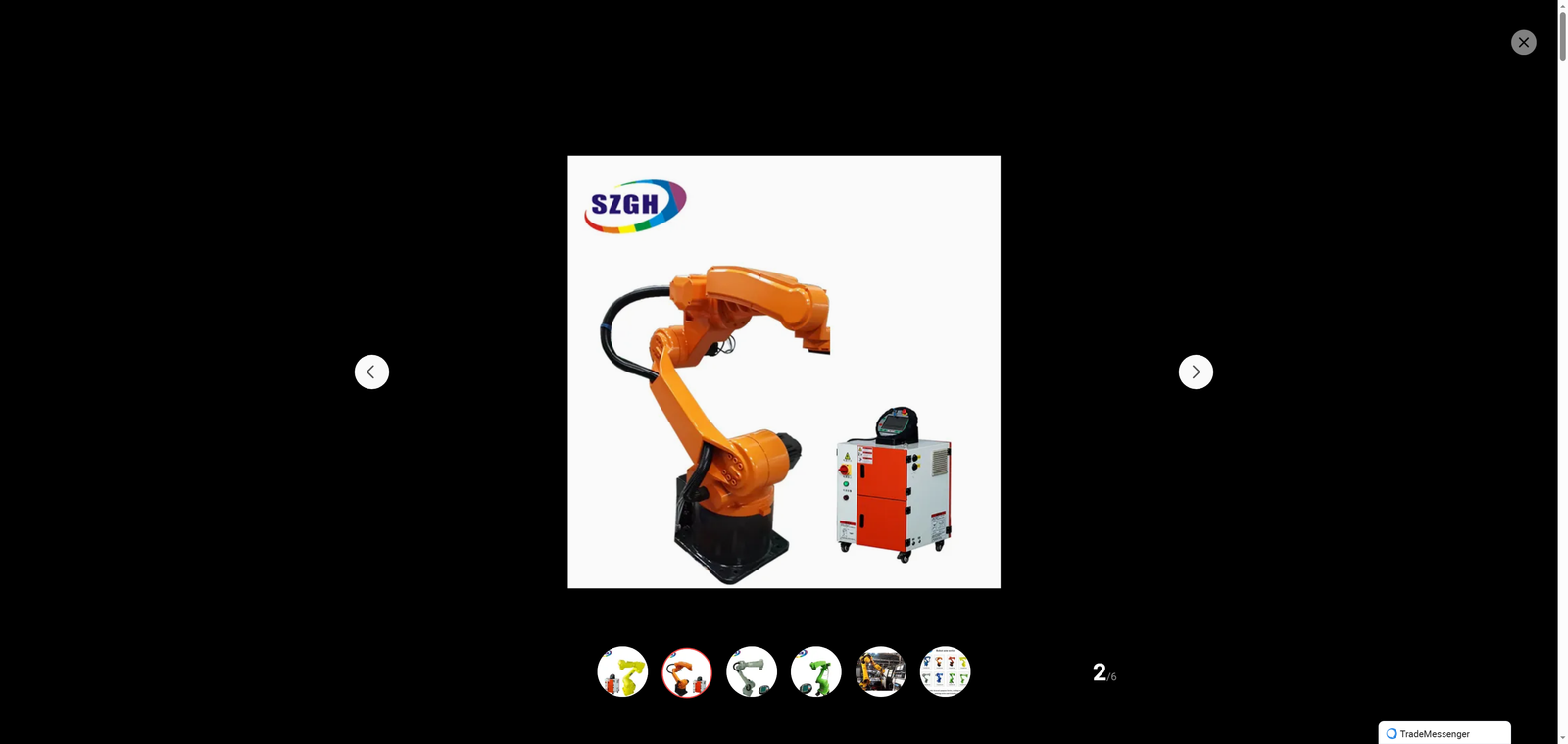
With the rapid advancement of Industry 4.0 and the deep integration of intelligent manufacturing technologies, industrial robots have gradually become the core driving force for transforming production methods, improving production efficiency, and promoting industrial upgrading. Among the diverse robot product system, 6 Axes CNC Manufacturing Robot, Robot Controller, Robot Arm, 3D Printing Robot, Scara Robot, Glass Lifter, and Kuka Robot stand out as key representatives, covering multiple fields such as precision manufacturing, intelligent processing, and material handling. They are jointly building a new pattern of intelligent production with their unique technological advantages and application scenarios.
The 6 Axes CNC Manufacturing Robot is a benchmark for precision operation in the field of industrial robots. Different from traditional multi-axis robots, its 6 degrees of freedom design enables it to simulate the flexible movement of human arms, realizing arbitrary posture adjustment in three-dimensional space. In CNC manufacturing scenarios such as auto parts processing, precision component machining, and mold manufacturing, the 6 Axes CNC Manufacturing Robot can complete complex operations such as loading and unloading, cutting, grinding, and welding with high precision. Its repeated positioning accuracy can reach ±0.01mm, which not only ensures the consistency of product quality but also significantly improves production efficiency. Compared with manual operation, it can reduce production cycle by 30% - 50% and avoid safety risks caused by manual operation in harsh environments.
As the "brain" of industrial robots, the Robot Controller is the core component that determines the performance of robots. It undertakes the functions of motion control, path planning, signal processing, and human-computer interaction, and can accurately control the movement trajectory and action sequence of the robot arm. With the development of technologies such as industrial Internet and artificial intelligence, modern robot controllers have realized functions such as multi-robot collaborative control, remote monitoring, and intelligent fault diagnosis. Through the integration with CNC systems, MES production management systems, etc., it can realize the information interconnection and intelligent scheduling of the entire production line, laying a solid foundation for the construction of digital workshops and smart factories. Whether it is a 6-axis robot, a SCARA robot or a 3D printing robot, the performance of the controller directly affects the stability and reliability of the robot's operation.
The Robot Arm, as the "executive organ" of industrial robots, is the key to realizing material handling and operation execution. According to different application scenarios, robot arms can be divided into multi-axis articulated arms, SCARA arms, Cartesian coordinate arms, etc., each with its own characteristics. The multi-axis articulated arm is flexible and suitable for complex spatial operations; the SCARA robot arm has the advantages of fast movement speed and high repeatability, which is suitable for planar operation scenarios such as assembly and sorting; the Cartesian coordinate robot arm has a simple structure and high positioning accuracy, which is widely used in linear handling and stacking. In practical applications, the robot arm is often equipped with end effectors such as grippers, suckers, and welding torches to meet the needs of different operations, forming a complete robot operation system.
The 3D Printing Robot, a combination of 3D printing technology and robot technology, has broken through the limitations of traditional 3D printing equipment. Traditional 3D printers are often limited by the printing volume and can only print small and medium-sized parts. The 3D Printing Robot, relying on the flexible movement of the robot arm, can realize large-size, complex-shaped part printing without being restricted by the printing space. It can not only print metal materials such as titanium alloy and aluminum alloy but also process non-metallic materials such as plastic and ceramic. In fields such as aerospace component manufacturing, custom parts production, and mold rapid prototyping, the 3D Printing Robot has shown unique advantages. It can shorten the product development cycle, reduce the cost of mold manufacturing, and realize the personalized production of products, which is an important direction for the development of additive manufacturing technology.
The SCARA Robot (Selective Compliance Assembly Robot Arm) is a special type of industrial robot designed for planar assembly operations. It has four degrees of freedom, including three rotating degrees of freedom and one linear degree of freedom, which can complete rapid movement and positioning in the horizontal plane. Compared with other types of robots, the SCARA robot has the characteristics of fast movement speed, high positioning accuracy, and simple structure, and is widely used in electronic product assembly, auto parts assembly, packaging and sorting, and other scenarios. For example, in the production line of mobile phones and computers, the SCARA robot can complete the assembly of components such as chips, resistors, and capacitors with high efficiency and precision, with an average operating speed of 3-5 times that of manual operation. At the same time, its compact structure can save production space and improve the utilization rate of the production line.
The Glass Lifter is a professional robot product designed for the glass processing and handling industry. Glass products have the characteristics of fragility, heavy weight, and high precision requirements, so the handling process requires stable and smooth operation to avoid damage to the glass. The Glass Lifter adopts a special vacuum suction cup end effector, which can firmly absorb glass products of different sizes and thicknesses, and realizes safe handling through the precise control of the robot arm. It is widely used in fields such as architectural glass installation, automotive glass assembly, and glass deep processing. In the automotive production line, the Glass Lifter can accurately install the windshield, door glass, etc., on the car body, ensuring the installation accuracy and sealing performance of the glass, and improving the automation level of the automotive production line.
As a world-renowned industrial robot brand, Kuka Robot has always been at the forefront of the global intelligent manufacturing industry. Kuka's product line covers 6-axis robots, SCARA robots, collaborative robots, etc., which are widely used in automotive manufacturing, electronic manufacturing, logistics and warehousing, and other fields. Kuka robots are famous for their high precision, high stability, and strong adaptability. Their 6-axis robots can meet the needs of complex manufacturing operations, and their collaborative robots can work safely with humans without safety fences, which is suitable for flexible production scenarios. In addition, Kuka has a complete intelligent manufacturing solution, which can provide customers with one-stop services from robot products to production line integration, helping enterprises realize the transformation and upgrading of intelligent production.
In the new era of intelligent manufacturing, 6 Axes CNC Manufacturing Robot, Robot Controller, Robot Arm, 3D Printing Robot, Scara Robot, Glass Lifter, Kuka Robot and other core products are not only independent technical entities but also closely linked to form a complete intelligent production ecosystem. With the continuous innovation of technologies such as artificial intelligence, big data, and the Internet of Things, industrial robots will show a development trend of higher precision, more flexibility, and more intelligence. They will not only be widely used in traditional manufacturing industries but also gradually penetrate into emerging fields such as medical care, aerospace, and logistics and express delivery, bringing new changes to the global industrial pattern.
For enterprises, choosing the right robot products according to their own production needs is the key to realizing intelligent transformation. Whether it is improving production efficiency, ensuring product quality, or reducing production costs, industrial robots can play an important role. In the future, with the continuous reduction of robot costs and the continuous improvement of technology maturity, industrial robots will become the standard configuration of more enterprises, promoting the continuous development of the global manufacturing industry towards intelligence, refinement, and greenization.